
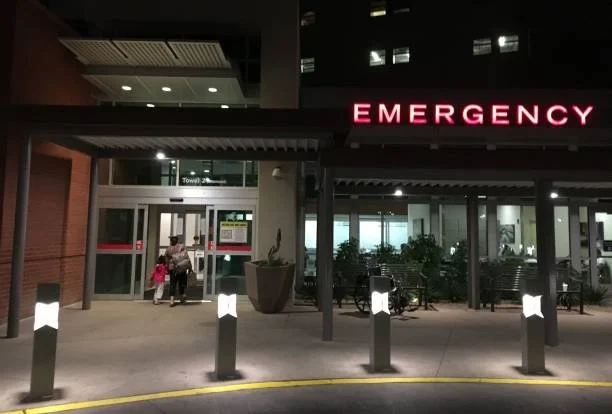
Alabama — Hospital Regulatory & Mandatory Reporting Guide
Alabama — Hospital Regulatory & Mandatory Reporting Guide
Alabama is an important hospital-regulation jurisdiction because serious hospital liability is not evaluated through the chart alone. Alabama hospitals operate under a detailed state licensing code enforced by the Alabama Department of Public Health, and that framework intersects with patient-care requirements, discharge duties, grievance handling, infection-control obligations, communicable-disease reporting rules, and healthcare-associated infection reporting. In practical litigation terms, that means a serious Alabama hospital case is rarely just a bedside negligence matter. It is often an institutional recognition, infection-control, discharge-integrity, grievance-response, and documentation-credibility case.
That distinction matters because Alabama’s hospital framework does not depend on one single headline adverse-event statute to create institutional exposure. Instead, Alabama regulates hospitals through broad licensure and operational rules that require the hospital to comply with communicable- and reportable-disease laws, maintain an infection-control system, implement patient-care and discharge protections, preserve medical-record integrity, and respond to patient complaints and grievances in an organized manner. Where the event also involves a communicable disease, suspected outbreak, urgent reportable condition, or healthcare-associated infection, an additional public-health chronology arises through Alabama’s reportable-disease rules and HAI reporting structure.
As a result, strong Alabama hospital matters are often best framed not as simple malpractice disputes but as institutional systems and reporting-integrity cases. The central questions usually become when the hospital recognized the seriousness of the occurrence, whether it escalated through infection-control and administrative pathways, whether discharge and follow-up systems functioned safely, whether public-health reporting obligations were triggered, and whether the chart, the hospital’s internal operational response, and any regulator-facing conduct remain consistent with one another.
Quick Authority Snapshot
Primary State Regulatory Authority
The Alabama Department of Public Health (ADPH), which licenses hospitals, enforces the Alabama hospital rules, administers communicable-disease reporting, and oversees healthcare-associated infection reporting.
Core Hospital Regulatory Framework
Alabama hospitals are governed by the Alabama hospital rules under the State Board of Health, including the amended hospital rules updated in November 2025. These rules establish minimum standards for hospital licensure, operation, patient care, infection control, records, and related institutional functions.
Discharge / Patient Care Overlay
Alabama’s hospital rules regulate patient-care processes, discharge-related instructions and continuity-sensitive practices, and the hospital’s obligations to ensure care is delivered through organized clinical services rather than informal individual decision-making alone.
Grievance / Complaint Overlay
Alabama requires a defined grievance process for patient complaints, giving ignored patient or family concerns operational significance beyond mere bedside disagreement.
Infection / Disease Reporting Overlay
Alabama’s infection-control rule requires a designated infection-control officer or officers and a system for identifying, reporting, investigating, and controlling infections and communicable diseases among patients and personnel. Separate communicable-disease rules require immediate, urgent conditions to be reported within 24 hours and many other conditions within three days unless otherwise specified.
Attorney Takeaway
In Alabama, case value often turns on whether the hospital recognized the institutional significance of the event, activated infection-control and complaint-response systems appropriately, preserved a stable medical record, complied with public-health reporting duties, and maintained a discharge and treatment narrative that matches the later defense account.
Statutory & Regulatory Architecture
Alabama Hospital Rules — Minimum Standards for Licensure and Operation
Alabama’s hospital rules are important because they establish the operational baseline for hospital licensure and ongoing compliance. The rules require a hospital to comply with laws relating to fire and life safety, sanitation, communicable and reportable diseases, certificate-of-need requirements, HAI reporting, and other relevant health and safety obligations. In litigation, this matters because a serious Alabama hospital event can be evaluated not only through professional standard-of-care testimony, but through whether the hospital’s licensed systems functioned in the way Alabama requires.
Hospital as an Integrated Institution
Alabama’s structure is significant because it treats the hospital as an organized institution rather than a collection of isolated providers. High-value cases in Alabama often involve breakdown across nursing, medical staff, infection control, administration, records, discharge handling, and ancillary services. The strongest matters are therefore not just about what one person did, but whether the hospital’s organizational systems worked when danger emerged.
Patient Care Rules and Operational Exposure
Alabama’s patient-care rules create institutional significance for failures in monitoring, escalation, coordination, medication handling, and follow-up planning. When a patient deteriorates, experiences severe medication harm, or is discharged unsafely, the issue is not merely whether one physician or nurse made a poor decision. The issue is whether the hospital’s regulated patient-care system functioned safely and consistently.
Discharge and Continuity-Sensitive Exposure
Alabama hospital cases involving premature discharge, poor instructions, weak home-care planning, or incomplete follow-up often become materially stronger because discharge-sensitive failures can be framed as institutional continuity breakdowns rather than ordinary aftercare disputes. Where the patient’s clinical condition, record, or later readmission suggests that the discharge narrative was not medically defensible, the case expands quickly.
Grievance Process as Institutional Evidence
Alabama’s hospital rules require a grievance process for patient complaints. This matters because repeated family concerns, patient complaints, ignored warnings, and failures to address safety concerns can become evidence of institutional dysfunction rather than mere interpersonal miscommunication. In litigation, cases often gain force when the hospital later claims surprise about a danger that the patient or family had already tried to raise.
Infection Control — Rule 420-5-7-.12
Alabama’s infection-control rule is one of the most important institutional-liability tools in the state. A person or persons must be designated as infection-control officer or officers to develop and implement infection-control policies. The rule requires a system for identifying, reporting, investigating, and controlling infections and communicable diseases of patients and personnel. This matters because infection cases in Alabama are not limited to whether one patient acquired an infection. They frequently turn on whether the hospital had a functioning surveillance and response structure at all.
Investigation and Control of Communicable Diseases
The infection-control rule’s requirement to identify, report, investigate, and control infections is especially significant in outbreak-sensitive litigation. Delayed isolation, weak surveillance, failure to recognize clustering, poor documentation of infection trends, or passive response to communicable disease can therefore be framed as institutional nonperformance under a defined hospital rule rather than simple clinical oversight.
Communicable Disease Reporting — Chapter 420-4-1
Alabama separately imposes public-health reporting obligations through the notifiable-disease rules. Rule 420-4-1-.04 states that diseases designated as immediate, urgent must be reported to the State Health Officer or County Health Officer within 24 hours of presumptive diagnosis or occurrence. Appendix I further requires many standard diseases and conditions to be reported electronically within three days unless otherwise noted. This creates a second public-health-facing chronology in communicable-disease, outbreak, and exposure-sensitive hospital cases.
Reporters Cannot Assume Labs Will Report for Them
ADPH’s current reporting guidance expressly states that reporters cannot assume or delegate laboratories to report for them. That is a major litigation detail. In infection-sensitive cases, a hospital or provider cannot credibly rely on the expectation that the laboratory handled the public-health reporting burden. The reporting obligation remains operationally significant at the institutional level.
HAI Reporting Requirements
Alabama requires acute care hospitals to report certain healthcare-associated infections to ADPH through CDC’s National Healthcare Safety Network. Alabama’s HAI regulations also include privacy, confidentiality, studies and publications, and penalties provisions. This is highly significant because serious infection cases may widen beyond one patient’s injury into broader surveillance, data integrity, benchmarking, and institutional-prevention issues.
Medical Records and Narrative Stability
Although Alabama’s hospital rules address a wide range of clinical and administrative operations rather than only standalone record provisions, documentation integrity remains central. In litigation, missing deterioration-window notes, inconsistent timing, unstable discharge summaries, weak infection chronology, and narrative drift after the event undermine the credibility of the hospital’s overall licensed operation. In Alabama, chart instability often becomes one of the strongest multipliers of institutional exposure.
High-Value Litigation Patterns in Alabama
Failure to Rescue / Delayed Recognition Cases
These are among the strongest Alabama hospital matters because they often expose both bedside negligence and institutional response failure. Common patterns include delayed response to abnormal vital signs, missed sepsis progression, delayed physician notification, monitor failure, failure to act on critical laboratory values, and inadequate post-procedural surveillance. These cases become materially stronger when the hospital’s systems did not react with the urgency the clinical record required.
Discharge Failure and Premature Release Cases
Alabama is particularly important for discharge-sensitive litigation because unsafe discharge often signals institutional breakdown rather than isolated judgment error. Premature discharge, weak follow-up instructions, poor caregiver education, insufficient warning signs, unresolved instability at discharge, and contradictory discharge documentation can all support stronger continuity-of-care theories.
Infection Control, Reportable Disease, and Outbreak Cases
Infection cases are especially strong in Alabama because they may implicate the infection-control rule, public-health reporting duties, and HAI reporting requirements simultaneously. Delayed isolation, weak infection documentation, failure to recognize a communicable disease, cluster-sensitive conditions, poor corrective action, or reliance on the lab to report when the facility should have ensured reporting can broaden one infection case into a major institutional systems case.
Medication, Procedure, and Operative Harm Cases
Medication catastrophes, operative complications, post-anesthesia failures, and wrong-patient or wrong-procedure concerns can become powerful Alabama institutional cases when the hospital’s internal systems, monitoring response, and documentation narrative do not align. These cases are often strongest when the hospital later attempts to normalize an event that the clinical record suggests was serious and institutionally significant from the outset.
Complaint, Family Warning, and Grievance-Sensitive Cases
Cases involving repeated family concern, ignored patient complaints, or delayed administrative response are particularly significant in Alabama because the rules require a grievance process. These matters often gain force when the institution later claims it had no meaningful notice of the danger despite documented patient or family warnings.
Repeat-Pattern and Institutional Drift Cases
Alabama matters become especially valuable when the event appears not to be isolated. Recurrent infections, repeated documentation instability, recurring discharge failures, repeated deterioration-recognition problems, or repeated complaint-handling failures can support the argument that the hospital had tolerated organizational vulnerability rather than a one-time error.
Timeline Forensics — Advanced Reconstruction of Alabama Institutional Response
Alabama cases should often be reconstructed through several parallel timelines: the clinical timeline, the administrative escalation timeline, the discharge timeline, the infection-control and communicable-disease timeline, the grievance / complaint timeline, and the medical-record timeline. Where those timelines diverge, institutional credibility deteriorates quickly.
Phase 1 — Clinical Recognition
The first issue is when the hospital had enough information to know the matter had crossed out of routine care and into serious-event territory. This may arise from rapid deterioration, failed rescue, sepsis progression, medication harm, procedure complication, suspected communicable disease, cluster emergence, or a discharge-risk pattern obvious before the patient left the facility. In Alabama, this recognition point matters because later duties around infection control, reporting, discharge handling, and grievance sensitivity all depend on whether the institution appreciated the significance of the event in real time.
Phase 2 — Internal Escalation
Next determine whether the matter moved quickly enough from bedside staff to supervisory nursing, treating physicians, administration, infection-control officers, and other relevant personnel. Strong Alabama cases often expose lag here. The chart reflects serious concern, but the institution does not behave administratively as though it is facing a significant patient-safety problem until much later.
Phase 3 — Classification Decision
This stage asks whether the hospital accurately understood what kind of event it was facing. Was it treated as routine progression when it was actually failed rescue, unsafe discharge, communicable disease, outbreak-sensitive occurrence, or broader institutional deterioration? In Alabama, misclassification is often where institutional weakness begins to compound because the wrong classification distorts infection response, complaint handling, and record development.
Phase 4 — External Reporting and Public-Health Exposure
Once the event is recognized properly, the next issue is whether the hospital activated the correct external-facing duties. Was an immediate, urgent condition reported within 24 hours? Was a standard reportable condition reported electronically within three days if applicable? Did the hospital ensure reporting rather than assuming the laboratory had done it? Did HAI-sensitive review become implicated? A delayed or softened public-health chronology can become one of the strongest institutional-liability themes in the case.
Phase 5 — Operational and Corrective Response
The next stage asks what the hospital actually did. Was discharge reconsidered? Were infection-control corrective measures implemented? Were complaints elevated through the grievance process? Were records stabilized while the event unfolded? Did clinical services coordinate around the seriousness of the event? The strongest Alabama cases often show not only a bad event, but a weak or fragmented operational response after the hospital had enough information to act.
Phase 6 — Narrative Consistency
The final comparison is whether the chart, discharge documentation, complaint history, infection-control activity, public-health reporting conduct, and later testimony all align. Alabama cases become especially dangerous when the medical record suggests a broader institutional problem, but the later defense narrative treats the matter as isolated and clinically unavoidable.
Federal Overlay — How CMS Standards Amplify Alabama Exposure
Alabama’s state structure is already substantial, but the strongest hospital cases often become materially more dangerous when the same facts also implicate federal Conditions of Participation. The best Alabama cases are usually those in which the same occurrence appears deficient clinically, deficient under Alabama hospital rules, and deficient under federal participation standards.
Patient Care and Governing Oversight Convergence
Alabama’s hospital rules governing organized patient care and institutional compliance align naturally with federal quality and governing-body expectations. When a serious event reveals weak escalation, poor institutional monitoring, or fragmented follow-through, the same facts may support both state and federal institutional-failure theories.
Discharge Planning and Continuity Convergence
Unsafe discharge, weak follow-up instructions, and incomplete continuity planning often overlap naturally with federal discharge expectations. In Alabama, these failures can therefore become objective institutional evidence rather than merely sympathetic case facts.
Patient Complaint and Grievance Convergence
Alabama’s grievance-process requirement aligns naturally with broader federal patient-complaint expectations. Cases involving ignored warnings, delayed family response, or concerns not meaningfully addressed often become stronger because the failure is institutional, not merely interpersonal.
Infection Prevention Convergence
Alabama’s infection-control rule, communicable-disease reporting duties, and HAI surveillance environment align naturally with federal infection-prevention expectations. When a hospital misses a cluster, delays isolation, or fails to respond coherently to a reportable communicable-disease problem, exposure compounds quickly.
Documentation Integrity Convergence
Unstable documentation, inconsistent discharge materials, thin infection chronology, and weak event reconstruction can overlap naturally with federal documentation and continuity-of-care expectations. In Alabama, record weakness often magnifies both state and federal institutional exposure.
Litigation Implications — Advanced Institutional Liability Analysis
Alabama hospital litigation should not be approached as a simple negligence problem. It should be approached as a multi-document, multi-timeline, institution-level credibility problem. The strongest theories usually show that the outcome was not merely unfortunate, but that the hospital’s own operational and reporting structure exposed deeper institutional weakness.
Failure of Institutional Recognition and Escalation
One of the strongest Alabama liability themes is that the hospital did not recognize or escalate the event with the seriousness its own systems required. This may appear as delayed physician escalation, weak infection-control involvement, passive handling of deterioration, poor administrative response, or failure to reconsider discharge. These failures are stronger than ordinary hindsight allegations because Alabama expects organized hospital systems, not ad hoc reactions.
Discharge Failure as a Liability Multiplier
Alabama cases often become materially more dangerous when the discharge process does not fit the clinical reality. If the patient was discharged despite unresolved instability, weak instructions, poor communication, or a record that does not support safe transition, the case quickly evolves from a bedside dispute into an institutional continuity-of-care failure.
Infection Surveillance and Reporting Failure
In Alabama, infection cases gain value sharply when the hospital had enough information to suspect communicable disease, outbreak-sensitive conditions, or HAI-relevant events but did not respond through infection-control systems, corrective measures, or health-department reporting in a timely and coherent manner. These cases are often stronger than routine infection-negligence disputes because the state expects structured institutional action.
Documentation Integrity as Institutional Evidence
Alabama cases often become more dangerous when charting is unstable. When bedside notes, discharge materials, infection chronology, complaint history, and later institutional explanations do not align, the case quickly stops being about whose expert sounds more persuasive and becomes a question of why the hospital generated different versions of the same event.
Expansion from Provider Fault to Institutional Fault
A provider-centered case can evolve into an institutional case very quickly in Alabama. The reasons are predictable: hospital rules require organized compliance with communicable-disease laws, grievance systems, infection-control systems, and HAI reporting; public-health rules create a second reporting track in communicable-disease cases; and discharge-sensitive failures broaden the case into continuity-of-care territory. This shift often changes valuation materially because institutional-failure theories are more durable than provider-only negligence theories.
Settlement and Trial Impact
An Alabama case with weak discharge chronology, unstable records, poor infection-control response, delayed public-health reporting, and a drifting institutional narrative will usually carry greater settlement pressure than a similar bedside-only negligence case. At trial, the narrative is stronger: the hospital did not merely make an error; it failed to recognize, organize, document, and respond to the event in the way Alabama’s own structure expects.
Attorney Application
For Plaintiff Counsel
- Determine whether the event exposed a breakdown in Alabama-required hospital systems such as infection control, grievance handling, discharge practices, communicable-disease reporting, or record integrity.
- Map the bedside chronology against administrative escalation, discharge handling, infection-control activation, and any reportable-disease obligations.
- Use Alabama’s infection-control rule to frame communicable-disease and HAI-sensitive cases as institutional surveillance and response failures rather than isolated bedside mistakes.
- Use the grievance-process requirement where patients or families raised concerns that were ignored or poorly addressed.
- Use current ADPH reporting guidance to test whether the hospital ensured public-health reporting instead of assuming a laboratory handled it.
- Use record instability to widen charting defects into institutional credibility and compliance problems.
For Defense Counsel
- Build a disciplined chronology showing when the hospital recognized the event and how it moved through discharge, infection-control, reporting, and complaint-response pathways.
- Demonstrate coherent coordination between bedside staff, administration, infection-control officers, and any public-health reporting obligations.
- Address communicable-disease, urgent reporting, and HAI-sensitive dimensions directly where they exist rather than leaving them implicit.
- Show that discharge handling was timely, individualized, and supported by documented clinical reassessment.
- Stabilize the institutional narrative before discovery fractures credibility across charting, discharge materials, infection timelines, and regulator-sensitive conduct.
When to Engage Lexcura Summit
Alabama hospital matters often justify early clinical-regulatory review because the strongest liability themes usually emerge from the interaction between the chart, discharge handling, infection-control systems, communicable-disease duties, grievance response, HAI reporting, and medical-record integrity. Lexcura Summit is typically engaged when counsel needs more than a chronology and requires disciplined analysis of causation, escalation failure, systems exposure, and reporting integrity.
Engage Early When the Case Involves:
- Unexpected death, catastrophic injury, or major deterioration with unclear institutional escalation history
- Failure to rescue, sepsis, delayed physician notification, or monitor failure
- Possible hospital-acquired infection, delayed isolation, communicable-disease exposure, or weak infection surveillance
- Urgent or immediate reportable conditions with unclear Alabama public-health reporting history
- Premature discharge, poor follow-up planning, caregiver communication gaps, or continuity breakdown
- Medication catastrophe, operative complication, or unstable procedural documentation
- Ignored complaints, unaddressed family warnings, or grievance-process failure
- Documentation inconsistency suggesting institutional narrative drift
- Potential institutional liability extending beyond one provider
What Lexcura Summit Delivers
- Litigation-ready medical chronologies with event-sequence precision
- Standards-of-care and escalation analysis tied to Alabama hospital rules and institutional operations
- Institutional exposure mapping across infection control, grievance systems, discharge practices, communicable-disease reporting duties, HAI-sensitive structures, and record integrity
- Physiological causation analysis in deterioration and rescue-failure cases
- Strategic support for deposition, mediation, discovery planning, and expert preparation
Records may be submitted through the HIPAA-secure intake portal for preliminary review. Lexcura Summit then issues a letter of engagement outlining scope and cost. Upon confirmation and upfront payment, analysis begins and the completed work product is returned within 7 days.
Closing Authority Statement
Alabama hospital liability is defined not solely by the clinical outcome, but by the institution’s ability to recognize, organize, document, and respond to serious events within a layered licensure and public-health framework. Through Alabama’s current hospital rules, the state imposes minimum requirements governing hospital licensure, patient care, grievance handling, infection control, communicable-disease compliance, and related institutional operations. Through Chapter 420-4-1, Alabama separately imposes immediate, urgent and other reportable-disease duties. Through its HAI reporting program, Alabama also places hospital infection performance within a broader surveillance and benchmarking structure.
The analysis therefore begins with clinical reality. Where the medical record reflects major deterioration, severe infection, unsafe discharge, operative harm, medication catastrophe, cluster conditions, or another serious patient-safety occurrence, the hospital is expected to recognize that the event has moved beyond ordinary care variation and into institutionally significant territory. When recognition is delayed, incomplete, or internally fragmented, institutional accountability begins from a weakened position.
From that point, the inquiry advances to escalation and classification. Alabama’s structure requires hospitals to act through organized systems: patient-care operations, discharge handling, infection-control structures, grievance response, communicable-disease compliance, and record integrity. Where the institution delays escalation, minimizes the significance of infection or outbreak signals, fails to recognize discharge risk, or allows records to become unstable, the issue is no longer limited to clinical care. It becomes a question of whether the hospital accurately understood and managed the event at all.
The next layer examines operational response. Alabama requires real infection-control systems, real communicable-disease reporting compliance, real patient complaint handling, and defensible continuity-sensitive care. A serious case therefore does not end with whether a provider made a mistake. It extends to whether the hospital’s licensed operational systems were current, coordinated, and actually functioning when the patient needed them most.
The analysis then converges on documentation and narrative consistency. The most consequential Alabama cases are those in which the bedside chart, discharge materials, infection-control chronology, complaint history, any public-health reporting conduct, and the institution’s later testimony do not align. When the hospital tells one story in contemporaneous records and another through later explanation, that discrepancy becomes more than impeachment material. It becomes evidence that the institution cannot present a coherent and reliable account of what occurred.
This progression — recognition, escalation, discharge and infection response, documentation, public-health reporting, grievance response, and narrative integrity — creates a compounding liability framework. Delayed recognition weakens escalation. Weak escalation distorts operational response. Deficient operational response destabilizes records and continuity. And unstable records and inconsistent explanations amplify exposure at every later phase of litigation.
Alabama’s structure is designed to expose precisely this kind of compounding institutional failure. It does not ask only whether harm occurred. It asks whether the hospital responded to harm in a manner consistent with its obligations to patients, regulators, public-health authorities, and its own licensed systems.
Judicial Framing:
Where a hospital fails to timely recognize a serious event, does not escalate it through infection-control, discharge, grievance, recordkeeping, and reporting systems, neglects communicable-disease obligations where applicable, and advances a narrative inconsistent with the clinical record, the resulting harm is not attributable to isolated clinical judgment alone — it is attributable to institutional failure across multiple operational and regulatory layers.
Definitive Conclusion:
The most compelling Alabama hospital cases establish that liability is not created by a single adverse event, but by the institution’s cumulative failure to recognize, classify, escalate, document, discharge, report, and accurately account for that event. In these cases, the central issue is not whether an error occurred, but whether the hospital’s systems functioned with sufficient integrity to respond when it did. Where they did not, liability becomes both foreseeable and difficult to defend.