
Iowa - Hospital Regulatory & Mandatory Reporting Guide
Iowa — Hospital Regulatory & Mandatory Reporting Guide
Iowa is a highly useful hospital jurisdiction for litigation because it does not confine institutional accountability to a narrow adverse-event statute. Instead, Iowa regulates hospitals through a broad operational framework in 481—Chapter 51 that reaches quality improvement, patient rights, grievances, medical records, infection control, emergency services, nursing, surgical services, and service-specific documentation expectations. In practical litigation terms, that means a serious Iowa hospital case is rarely just a bedside negligence dispute. It often becomes an institutional quality, escalation, record-integrity, infection-control, and public-health-reporting case.
That structure matters because Iowa gives counsel multiple independent regulatory anchors. The hospital must maintain an ongoing hospitalwide quality-improvement program, with governing-body oversight, physician participation, remedial-action development, monitoring, communication, and documentation. The hospital must adopt patient-rights principles that include access to treatment, dignity, confidentiality, reasonable safety, access to clinical information, the right to refuse treatment to the extent authorized by law, billing explanation, and a process for pursuing grievances. Accurate and complete medical records must be maintained and kept accessible, and the Department must be given unrestricted access to electronic records during survey or investigation. Emergency-service cases must include a medical record on every treated patient, with minimum documentation for screening, emergency condition determination, transfer or discharge basis, and transfer acceptance details. Iowa also requires infection-control policies and procedures that comply with state communicable-disease rules and CDC isolation guidance. :contentReference[oaicite:1]{index=1}
Iowa then adds a second, independent public-health chronology. Under current 641—Chapter 1, hospitals and other health care facilities are required to report cases of reportable diseases, poisonings, and conditions. Iowa HHS separately states that all outbreaks should be immediately reported, and Iowa’s HAI program guidance specifically directs facilities to public-health reporting resources for immediate outbreak reporting, bioterrorism reporting, and disease-specific reporting instructions. This means infection-sensitive and cluster-sensitive cases in Iowa often turn on whether the hospital’s internal chronology and the public-health chronology move together or diverge. :contentReference[oaicite:2]{index=2}
As a result, strong Iowa hospital matters are usually best framed as institutional systems and chronology cases. The key questions are when the hospital recognized danger, whether that danger was moved through the quality and service-line structure appropriately, whether patients and families were treated consistently with Iowa’s patient-rights framework, whether the record remained stable and complete, whether emergency or transfer documentation matched the clinical reality, whether infection-control precautions were activated, and whether any reportable disease or outbreak was handled through the required public-health pathway.
Quick Authority Snapshot
Primary Regulatory Authority
Iowa’s hospital rules are in 481—Chapter 51, and public-health disease reporting is governed through Iowa HHS under 641—Chapter 1.
Core Hospital Regulatory Framework
481—51 requires an ongoing hospitalwide quality-improvement program, governing-body oversight, patient-rights principles, accurate and complete medical records, emergency-service documentation, infection-control compliance, and service-specific operational standards.
Key Operational Litigation Anchors
Quality-improvement review, patient grievances, emergency screening and transfer documentation, complete medical records, infection-control segregation and isolation, personnel health assessments, and service-line policy requirements all create institutional-liability leverage in Iowa.
Public Health Reporting Overlay
641—Chapter 1 requires hospitals and other health care facilities to report reportable diseases, poisonings, and conditions. Iowa HHS additionally directs that all outbreaks be reported immediately.
HAI / Infection Overlay
Iowa HHS maintains HAI and infection-prevention guidance, directs immediate outbreak reporting, and uses NHSN-linked HAI infrastructure and related public-health support resources.
Attorney Takeaway
In Iowa, case value often turns on whether the hospital recognized the institutional significance of the event, moved it through quality, emergency, recordkeeping, grievance, and infection-control systems appropriately, and maintained a narrative that remains stable across the chart, operations, and public-health reporting chronology.
Statutory & Regulatory Architecture
481—51.3 — Hospitalwide Quality Improvement Program
Iowa’s quality-improvement requirement is one of the strongest institutional-liability tools in the state. The hospital must maintain an ongoing hospitalwide quality-improvement program designed to improve patient care by assessing clinical patient care, assessing nonclinical and patient-related services, developing remedial action as needed, and monitoring and evaluating remedial action taken. The governing body must ensure the program is effective and patient-oriented. Physician members of the medical staff and other health care professionals must actively participate, and the written plan may address objectives, organization, scope, oversight, department participation, committee review, coordination, and regular communication and reporting to the governing board, medical staff, and hospital administrator. This is highly significant in litigation because Iowa gives counsel a formal institutional pathway for arguing that the event was not just a clinical lapse, but a failure of the hospital’s own continuous oversight and remedial structure.
Governing Body Oversight and Institutional Accountability
The Iowa rules place responsibility for the hospitalwide quality-improvement structure directly on the governing body. That matters because serious cases often turn on whether a hospital had the managerial discipline to identify recurring deterioration failures, repeated infection concerns, chart instability, ED transfer problems, or service-line defects before the plaintiff’s event occurred. Where a pattern exists, the quality-improvement rule allows the case to expand from provider fault into institutional fault with a governance dimension.
481—51.6 — Patient Rights and Responsibilities
Iowa’s patient-rights provision materially broadens the litigation field. The governing board must adopt and make available principles addressing access to treatment regardless of protected status or payment source, preservation of dignity and privacy, confidentiality of medical and other appropriate information, assurance of reasonable safety within the hospital, knowledge of the identity of the responsible physician and other personnel, the patient’s right to information regarding condition unless medically contraindicated, consultation with a specialist at the patient’s request and expense, the right to refuse treatment to the extent authorized by law, access to and explanation of billings, and a process for patient pursuit of grievances. These requirements make Iowa especially useful in cases involving ignored family concerns, poor disclosure, dignity breakdown, refusal disputes, weak complaint response, and institutional claims that the patient was fully informed when the record suggests otherwise. :contentReference[oaicite:3]{index=3}
Grievance Process as Institutional Evidence
Iowa’s requirement that patient-rights principles include a grievance process is more important than it first appears. In litigation, repeated complaints, family warnings, refusal conflicts, billing disputes tied to treatment explanation, and concerns about safety can all take on institutional significance because Iowa expects hospitals to have an organized pathway for patient pursuit of grievances. When a hospital later claims that it lacked notice of a developing risk, the presence of ignored or poorly handled grievances can materially strengthen the liability theory.
481—51.10 — Records and Reports
Iowa’s records rule is a core litigation anchor. Accurate and complete medical records must be maintained for all patients and signed by the appropriate provider, and these records must be filed and stored in an accessible manner. The hospital must also maintain admission, death, birth, and controlled-substance records. The Department is entitled to unrestricted access to electronic records pertaining to patient care, and hospitals must provide system access, a terminal, and requested printouts in a time frame that does not intentionally prevent or interfere with survey or investigation. In practical terms, this gives record instability a direct regulatory dimension. Missing deterioration-window notes, incomplete medication chronology, absent transfer content, and unstable documentation are not just evidentiary weaknesses in Iowa — they are signs that the hospital’s regulated record infrastructure may not have functioned properly. :contentReference[oaicite:4]{index=4}
Nursing-Service and Staffing Structure
Iowa requires adequate numbers of licensed registered nurses, licensed practical nurses, and other personnel to provide nursing care essential for proper treatment, well-being, and recovery, and requires at least one registered nurse on duty at all times. Written policies and procedures must guide personnel, and unlicensed patient-care personnel must be supervised by a registered nurse with defined duties and instruction. These provisions are especially useful in failure-to-rescue, monitor-failure, and observation-sensitive cases because they allow counsel to test the hospital’s operational nursing structure rather than only isolated bedside judgment.
481—51.20 — Emergency Services
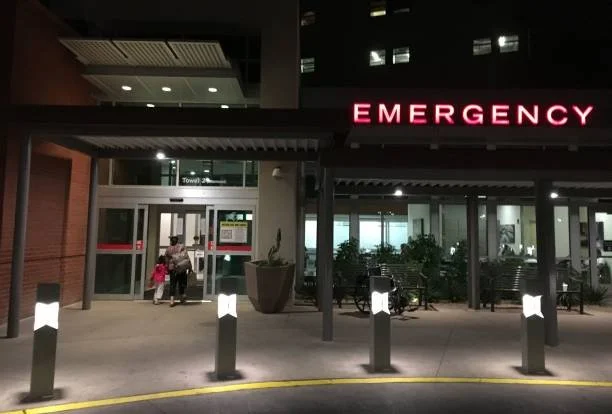
Iowa’s emergency-services rule is particularly important in ED-sensitive litigation. Every hospital must provide emergency services offering reasonable care within the medical capabilities of the facility in determining whether an emergency exists, rendering care appropriate to the facility, providing at minimum lifesaving first aid, and making appropriate referral to a facility capable of needed services. The hospital must have written policies specifying the scope and conduct of patient care in emergency services, and a medical record must be kept on every patient treated in the emergency service. The required documentation includes medical screening information, notation of refusal where relevant, physician documentation of the presence or absence of an emergency medical condition or active labor, physician documentation of transfer or discharge with the basis for that decision, and where transfer occurs, the identity of the receiving facility, acceptance by that facility, and means of transfer. This makes Iowa especially strong for ED delay, poor triage, weak stabilization, unsafe transfer, and thin emergency documentation cases. :contentReference[oaicite:5]{index=5}
481—51.17 — Infection Control
Iowa’s infection-control rule is one of the most important institutional tools in the chapter. The hospital must maintain proper policies and procedures for prevention and control of communicable diseases, including compliance with current Iowa HHS communicable-disease rules and CDC isolation guidance. The rule requires proper arrangement of areas, rooms, and patients’ beds to prevent cross-infection and control communicable diseases, proper cleansing of rooms and surgeries after care of a communicable case, proper isolation techniques for patients and staff, visitor-control policies, periodic health assessments for direct-care personnel including assessment for infectious or communicable diseases, tuberculosis screening, and notification to funeral or transport personnel of special precautions for known or suspected communicable disease before removal of a deceased patient. This is highly significant in hospital-acquired infection, cluster, exposure, and isolation-failure litigation because it gives the plaintiff concrete operational benchmarks rather than generalized infection-prevention rhetoric. :contentReference[oaicite:6]{index=6}
Surgical, Anesthesia, and Service-Line Quality Expectations
Iowa’s service-line rules add further institutional depth. Surgical-service policies must address infection control and disease prevention, aseptic surveillance and practice, identification of infected and noninfected cases, sterilization and disinfection procedures, ongoing monitoring of infections and infection rates, and ongoing quality assessment, performance improvement, and process improvement. Anesthesia-service policies must include quality assurance, infection-control procedures, integration into various hospital areas, and ongoing monitoring, review, and evaluation of services and processes. This means operative catastrophe, sterile-processing, surgical-site infection, retained contamination, and perioperative breakdown cases can be framed not merely as technical negligence disputes, but as failures of integrated quality and infection systems. :contentReference[oaicite:7]{index=7}
641—Chapter 1 — Reportable Diseases, Poisonings and Conditions
Iowa’s public-health reporting rules create a second, independent chronology in infection-sensitive and exposure-sensitive litigation. Hospitals, health care providers, clinical laboratories, and other health care facilities are required to report cases of reportable diseases, poisonings, and conditions. The rules authorize investigation of reportable diseases and permit the director to designate diseases, poisonings, conditions, or syndromes as temporarily reportable for special investigation. This matters because the public-health track may reveal that the hospital had enough information to recognize a reportable event long before the hospital’s internal narrative admits that the event had become serious. :contentReference[oaicite:8]{index=8}
Immediate Outbreak Reporting
Iowa HHS is especially clear that all outbreaks should be immediately reported. Its HAI guidance also directs facilities to immediate outbreak-reporting resources, immediate bioterrorism reporting resources, and complete disease-specific reporting instructions. That makes Iowa unusually useful in cluster-sensitive litigation. If the chart suggests linked infections, repeated resistant organisms, unusual communicable-disease occurrence, or institutional spread, the timing of Iowa public-health notification becomes a critical credibility measure. A hospital that treats an obvious cluster as isolated may face a much stronger institutional-failure narrative than a hospital that rapidly recognizes and reports the problem. :contentReference[oaicite:9]{index=9}
HAI Reporting Context
Iowa HHS’s HAI prevention and guidance infrastructure provides another layer of institutional expectation. The state’s HAI resources expressly connect facilities to outbreak-reporting obligations, disease reporting, NHSN references, and prevention guidance. In litigation, this matters because even where the case does not arise under a single Iowa HAI statute, the hospital still operates within a surveillance-and-prevention environment that expects facilities to recognize, contain, and communicate healthcare-associated infection risk institutionally rather than casually. :contentReference[oaicite:10]{index=10}
High-Value Litigation Patterns in Iowa
Failure to Rescue / Delayed Recognition Cases
These are among the strongest Iowa hospital matters because they often expose both bedside negligence and hospitalwide systems failure. Common patterns include delayed response to abnormal vital signs, missed sepsis progression, failure to act on critical laboratory information, weak nursing escalation, delayed physician response, and inadequate post-procedural observation. These cases become materially stronger when the clinical record shows accumulating warning signs, but the hospitalwide quality-improvement and staffing-sensitive framework appears not to have prevented or corrected the same type of breakdown.
Emergency Department and Transfer Breakdown Cases
Iowa is especially strong for ED-sensitive litigation because the rules require emergency care within the facility’s capability, a medical record for every emergency-service patient, and specific documentation for screening, emergency-condition determination, transfer or discharge basis, receiving-facility identity, acceptance, and means of transfer. Delayed screening, poor stabilization, unsafe transfer, discharge from the ED without a defensible basis, or thin documentation can therefore become institution-level failures rather than mere physician judgment disputes.
Infection Control, Isolation, and Outbreak Cases
Iowa’s infection-control and public-health structure makes infection litigation especially strong. Delayed isolation, poor room or bed segregation, inadequate cleansing after communicable cases, weak visitor control, thin infection documentation, failure to recognize clustering, and delay in immediate outbreak reporting can convert a one-patient infection case into a broader institutional-prevention and reporting case. These cases become particularly valuable where the public-health chronology lags behind what the hospital record suggests the facility already knew.
Surgical and Procedural Catastrophe Cases
Iowa’s service-line rules make major procedural and perioperative cases especially important. Wrong-site or wrong-patient concerns, retained foreign material, SSI-sensitive events, anesthetic failures, sterile-processing breakdown, operative contamination, and poor post-anesthesia documentation can all be framed through both clinical negligence and the hospital’s own required quality, infection, and service-integration systems.
Patient Rights, Grievance, and Family-Warning Cases
Cases involving ignored family concerns, inadequate communication, weak explanation of condition, refusal conflicts, dignity issues, or complaint-sensitive failures often gain value in Iowa because the hospital must make patient-rights principles available and include a grievance process. These cases are strongest where the institution later claims that the patient or family was informed and involved, but the actual record and complaint history suggest something very different.
Documentation Breakdown and Narrative Drift Cases
Some of the most dangerous Iowa hospital matters are fundamentally record-integrity cases. Missing signatures, incomplete record content, fractured emergency chronology, weak transfer documentation, unstable infection timeline, and narrative drift after the event can significantly increase case value. Once the documentation becomes unstable, the defense often loses the ability to portray the matter as a narrow expert disagreement and instead faces an institutional credibility problem.
Repeat-Pattern and Institutional Drift Cases
Iowa cases become especially valuable where the event does not appear isolated. Repeated infection problems, repeat ED transfer issues, repeated deterioration-recognition failures, recurrent complaint mishandling, recurring chart instability, or repeated service-line quality breakdowns can support the argument that the hospital tolerated institutional vulnerability rather than experiencing a one-time mistake.
Timeline Forensics — Advanced Reconstruction of Iowa Institutional Response
Iowa cases are often strongest when reconstructed through several parallel chronologies rather than a single bedside timeline. Counsel should compare the clinical timeline, the quality / administrative escalation timeline, the emergency or transfer timeline, the grievance / complaint timeline, the medical-record development timeline, and where relevant, the communicable-disease / outbreak reporting timeline. Where those chronologies diverge, institutional credibility weakens quickly.
Phase 1 — Clinical Recognition
The first issue is when the hospital had enough information to know the matter had crossed out of routine care and into serious-event territory. This may arise from sepsis progression, respiratory decline, failed response to critical labs, post-operative deterioration, ED instability, unsafe discharge from emergency services, or a cluster of symptoms suggesting communicable disease. In Iowa, that recognition point is crucial because all later duties — quality review, emergency documentation, grievance sensitivity, infection-control action, and public-health reporting — depend on whether the hospital appreciated the seriousness of the event in real time.
Phase 2 — Internal Escalation
Next determine whether the event moved quickly enough from bedside staff to nursing supervision, treating physicians, administration, infection-control personnel, and quality-sensitive service-line leadership. Strong Iowa cases frequently expose lag here. The chart reflects danger, but the institution does not behave as though it is facing a major patient-safety or outbreak-sensitive event until much later. That lag is often the point where provider-only cases evolve into institutional cases.
Phase 3 — Classification Decision
This stage asks whether the hospital accurately understood what kind of event it was facing. Was it treated as routine progression when it was actually failed rescue? Was it treated as ordinary infection when it was actually a cluster or reportable disease problem? Was the ED event treated as a simple referral when it was actually an unstable transfer? In Iowa, misclassification is often the stage where institutional weakness begins to compound because the wrong classification distorts quality review, emergency documentation, infection response, and public-health action.
Phase 4 — External Reporting and Public-Health Exposure
Once the event is recognized properly, the next question is whether the hospital activated any required external-facing obligations. Did the facts trigger reporting under 641—Chapter 1? Did the cluster require immediate outbreak reporting? Did the infection chronology move in the way Iowa HHS guidance expected? A delayed or absent public-health track can become one of the strongest institutional-liability themes in infection-sensitive matters because it suggests the hospital did not truly recognize or communicate the seriousness of the condition when it should have.
Phase 5 — Operational and Corrective Response
The next stage asks what the hospital actually did after it had enough information to act. Was the patient reassessed? Was the ED transfer handled correctly? Were visitors controlled, isolation precautions initiated, rooms or beds segregated, or service-line quality measures changed? Were grievances elevated and addressed meaningfully? Were records completed accurately while the event unfolded? The strongest Iowa cases often show not only a bad event, but a weak, fragmented, or performative institutional response after recognition.
Phase 6 — Narrative Consistency
The final comparison is whether the bedside chart, emergency documentation, transfer materials, grievance history, infection-control activity, public-health reporting conduct, and later litigation narrative all align. Iowa cases become especially dangerous when the contemporaneous record suggests a larger systems problem, but the hospital’s later explanation treats the matter as isolated, clinically unavoidable, or too uncertain to require external action.
Federal Overlay — How CMS Standards Amplify Iowa Exposure
Iowa’s state structure is already substantial, but the strongest hospital matters often become significantly more dangerous when the same facts also implicate federal Conditions of Participation. The most valuable Iowa cases are usually those in which the same occurrence appears deficient clinically, deficient under Iowa’s hospital rules, and deficient under federal participation standards.
Quality-Improvement and Governing-Body Convergence
Iowa’s hospitalwide quality-improvement rule aligns naturally with federal quality assessment and performance improvement expectations. When a serious event reveals repeated patient-care problems, weak remedial action, fragmented physician participation, or poor governing-body communication, the same facts may support both state and federal institutional-failure theories.
Patient Rights and Complaint Convergence
Iowa’s patient-rights and grievance requirements also align naturally with federal patient-rights expectations. Ignored warnings, poor disclosure, dignity-sensitive failures, refusal conflicts, and inadequate grievance handling can therefore become objective institutional evidence rather than merely sympathetic facts.
Emergency Services and Transfer Convergence
Because Iowa specifically regulates emergency-service screening, treatment, documentation, transfer basis, receiving-facility acceptance, and mode of transfer, ED-sensitive cases often overlap strongly with federal emergency capability, screening, stabilization, and transfer expectations. Weak triage or unstable transfer can therefore carry dual significance.
Infection Prevention and Public Health Convergence
Iowa’s infection-control rules, outbreak-reporting guidance, reportable-disease rules, and HAI-prevention infrastructure align naturally with federal infection-prevention expectations. When a hospital misses a cluster, delays isolation, or fails to report or respond coherently to a communicable-disease problem, exposure compounds quickly across state and federal frameworks.
Documentation and Survey Vulnerability
Because Iowa requires accurate and complete records and grants the Department broad access during survey or investigation, record instability can become a major multiplier when combined with federal expectations. Missing information, incomplete signatures, thin emergency content, or delayed production of key materials can substantially increase exposure by making the hospital appear administratively unreliable, not merely clinically mistaken.
Litigation Implications — Advanced Institutional Liability Analysis
Iowa hospital litigation should not be approached as a simple negligence problem. It should be approached as a multi-document, multi-timeline, institution-level credibility problem. The strongest theories usually show that the outcome was not merely unfortunate, but that the hospital’s own quality, operational, and reporting structure exposed deeper institutional weakness.
Failure of Institutional Recognition and Escalation
One of the strongest Iowa liability themes is that the hospital did not recognize or escalate the event with the seriousness its own systems required. This may appear as delayed physician escalation, weak quality-program sensitivity, passive response to deterioration, poor ED follow-through, or failure to appreciate the institutional significance of infection spread. These failures are stronger than ordinary hindsight allegations because Iowa expects organized hospital systems rather than improvised reactions.
Emergency Documentation and Transfer Failure as Liability Multipliers
Iowa cases often become materially more dangerous when the emergency-service record does not fit the clinical reality. If the patient was transferred or discharged without a clear documented basis, if receiving-facility acceptance is weak or absent, or if screening and emergency-condition documentation are thin, the case quickly evolves from a bedside dispute into an institutional emergency-systems failure.
Grievance and Patient-Warning Failure as Institutional Evidence
In Iowa, complaint-sensitive cases gain value sharply when the hospital had enough information from the patient or family to appreciate a growing danger but did not respond through its grievance or patient-rights pathway in a meaningful way. These cases are often stronger than ordinary communication disputes because the state expects hospitals to provide a real process for patient pursuit of grievances.
Infection Surveillance and Reporting Failure
In Iowa, infection-sensitive cases often become more dangerous when the hospital had enough information to suspect a reportable disease or outbreak but did not respond through isolation, segregation, visitor controls, cleansing, documentation, or immediate outbreak reporting in a timely and coherent manner. These cases are often stronger than ordinary infection-negligence disputes because Iowa expects structured institutional action and immediate outbreak notification.
Documentation Integrity as a Case-Valuation Driver
Iowa cases often become more dangerous when charting is unstable. When bedside notes, emergency records, transfer materials, grievance history, infection-control chronology, and later testimony do not align, the case stops being merely a battle of experts and becomes a question of why the hospital generated inconsistent versions of the same event. That shift often materially affects settlement value because documentation instability is easier for a factfinder to understand than abstract standard-of-care disagreement.
Expansion from Provider Fault to Institutional Fault
A provider-centered case can evolve into an institutional case very quickly in Iowa. The reasons are predictable: the hospital rules regulate quality improvement, patient rights, grievances, staffing, emergency services, service-line procedures, infection control, and records; the public-health rules create a second chronology in reportable-disease and outbreak cases; and the HAI-prevention framework reinforces the expectation that infection threats should be managed systematically. This shift often changes valuation substantially because institutional-failure theories are more durable than provider-only negligence theories.
Settlement and Trial Impact
An Iowa case with weak emergency chronology, unstable records, poor grievance handling, delayed outbreak response, and a drifting institutional narrative will usually carry greater settlement pressure than a similar bedside-only negligence case. At trial, the narrative is stronger: the hospital did not merely make an error; it failed to recognize, organize, document, review, and respond to the event in the way Iowa’s own structure expects.
Attorney Application
For Plaintiff Counsel
- Determine whether the event exposed a breakdown in Iowa-required hospital systems such as quality improvement, patient rights, grievances, emergency services, infection control, or medical-record integrity.
- Map the bedside chronology against administrative escalation, emergency screening, transfer or discharge decisions, grievance history, infection-control activation, and any reportable-disease or outbreak-reporting obligations.
- Use Iowa’s quality-improvement rule to frame repeated or preventable breakdowns as institutional failures rather than isolated bedside mistakes.
- Use patient-rights and grievance requirements where patients or families raised concerns that were ignored, minimized, or poorly documented.
- Use emergency-service documentation rules to test whether screening, stabilization, transfer, and discharge decisions were actually supported in real time.
- Use infection-control and immediate outbreak-reporting expectations to strengthen communicable-disease and HAI-sensitive cases.
For Defense Counsel
- Build a disciplined chronology showing when the hospital recognized the event and how it moved through quality, emergency, service-line, infection-control, and complaint-response pathways.
- Demonstrate coherent coordination between bedside staff, physicians, administration, infection-prevention personnel, and any public-health reporting obligations.
- Address communicable-disease, cluster, outbreak, and HAI-sensitive dimensions directly where they exist rather than leaving them implicit.
- Show that emergency, transfer, and discharge decisions were individualized, documented, and supported by the patient’s actual condition at the time.
- Stabilize the institutional narrative before discovery fractures credibility across charting, emergency documentation, grievance records, and reporting conduct.
When to Engage Lexcura Summit
Iowa hospital matters often justify early clinical-regulatory review because the strongest liability themes usually emerge from the interaction between the chart, quality-improvement systems, patient-rights handling, grievance response, emergency documentation, infection-control precautions, and public-health reporting duties. Lexcura Summit is typically engaged when counsel needs more than a chronology and requires disciplined analysis of causation, escalation failure, systems exposure, and reporting integrity.
Engage Early When the Case Involves:
- Unexpected death, catastrophic injury, or major deterioration with unclear institutional escalation history
- Failure to rescue, sepsis, delayed physician notification, or delayed response to critical findings
- Emergency department delay, poor screening, weak stabilization, unsafe transfer, or thin emergency documentation
- Possible hospital-acquired infection, delayed isolation, communicable-disease exposure, missed reporting, or weak outbreak chronology
- Ignored complaints, unaddressed family warnings, or grievance-process failure
- Surgical, anesthesia, sterile-processing, or perioperative infection issues
- Documentation inconsistency suggesting institutional narrative drift
- Potential institutional liability extending beyond one provider
What Lexcura Summit Delivers
- Litigation-ready medical chronologies with event-sequence precision
- Standards-of-care and escalation analysis tied to Iowa hospital rules and institutional operations
- Institutional exposure mapping across quality improvement, patient rights, grievance systems, emergency services, infection control, public-health reporting duties, and record integrity
- Physiological causation analysis in deterioration and rescue-failure cases
- Strategic support for deposition, mediation, discovery planning, and expert preparation
Records may be submitted through the HIPAA-secure intake portal for preliminary review. Lexcura Summit then issues a letter of engagement outlining scope and cost. Upon confirmation and upfront payment, analysis begins and the completed work product is returned within 7 days.
Closing Authority Statement
Iowa hospital liability is defined not solely by the clinical outcome, but by the institution’s ability to recognize, organize, document, and respond to serious events within a layered licensure and public-health framework. Through 481—Chapter 51, Iowa imposes minimum standards governing hospitalwide quality improvement, patient rights, grievance processes, staffing-sensitive nursing operations, medical-record integrity, emergency services, infection control, and service-line quality expectations. Through 641—Chapter 1, Iowa separately imposes reportable-disease duties on hospitals and other health care facilities. Through Iowa HHS outbreak and HAI guidance, the state further reinforces the expectation that facilities should recognize and communicate infection threats institutionally rather than casually. :contentReference[oaicite:11]{index=11}
The analysis therefore begins with clinical reality. Where the medical record reflects major deterioration, severe infection, unstable emergency presentation, failed transfer, communicable-disease concern, operative harm, or another serious patient-safety occurrence, the hospital is expected to recognize that the event has moved beyond ordinary care variation and into institutionally significant territory. When recognition is delayed, incomplete, or internally fragmented, institutional accountability begins from a weakened position. :contentReference[oaicite:12]{index=12}
From that point, the inquiry advances to escalation and classification. Iowa’s structure requires hospitals to act through organized systems: quality-improvement pathways, patient-rights protections, grievance response, emergency-service documentation, infection-control operations, and where relevant, public-health reporting. Where the institution delays escalation, minimizes the significance of infection or outbreak signals, fails to appreciate emergency-transfer risk, or allows records to become unstable, the issue is no longer limited to clinical care. It becomes a question of whether the hospital accurately understood and managed the event at all. :contentReference[oaicite:13]{index=13}
The next layer examines operational response. Iowa requires real quality review, real patient-rights infrastructure, real emergency documentation, real infection-control procedures, and real public-health reporting conduct when outbreaks or reportable diseases are implicated. A serious case therefore does not end with whether a provider made a mistake. It extends to whether the hospital’s licensed systems were current, coordinated, and actually functioning when the patient needed them most. :contentReference[oaicite:14]{index=14}
The analysis then converges on documentation and narrative consistency. The most consequential Iowa cases are those in which the bedside chart, emergency-service record, transfer or discharge documentation, grievance history, infection-control chronology, any public-health reporting conduct, and the institution’s later testimony do not align. When the hospital tells one story in contemporaneous records and another through later explanation, that discrepancy becomes more than impeachment material. It becomes evidence that the institution cannot present a coherent and reliable account of what occurred. :contentReference[oaicite:15]{index=15}
This progression — recognition, escalation, emergency or transfer response, grievance handling, infection and public-health response, documentation, and narrative integrity — creates a compounding liability framework. Delayed recognition weakens escalation. Weak escalation distorts operational response. Deficient operational response destabilizes records and continuity. And unstable records and inconsistent explanations amplify exposure at every later phase of litigation. Iowa’s structure is designed to expose precisely this kind of compounding institutional failure. It does not ask only whether harm occurred. It asks whether the hospital responded to harm in a manner consistent with its obligations to patients, regulators, public-health authorities, and its own licensed systems. :contentReference[oaicite:16]{index=16}
Judicial Framing:
Where a hospital fails to timely recognize a serious event, does not escalate it through quality, emergency, grievance, infection-control, recordkeeping, and reporting systems, neglects communicable-disease or outbreak obligations where applicable, and advances a narrative inconsistent with the clinical record, the resulting harm is not attributable to isolated clinical judgment alone — it is attributable to institutional failure across multiple operational and regulatory layers. :contentReference[oaicite:17]{index=17}
Definitive Conclusion:
The most compelling Iowa hospital cases establish that liability is not created by a single adverse event, but by the institution’s cumulative failure to recognize, classify, escalate, document, transfer, report, and accurately account for that event. In these cases, the central issue is not whether an error occurred, but whether the hospital’s systems functioned with sufficient integrity to respond when it did. Where they did not, liability becomes both foreseeable and difficult to defend. :contentReference[oaicite:18]{index=18}