
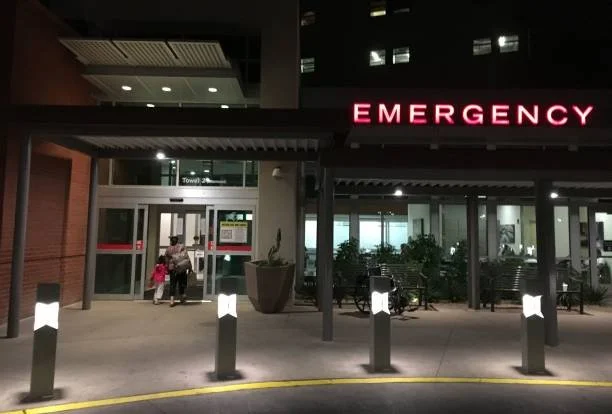
Louisiana - Hospital Regulatory & Mandatory Reporting Guide
Louisiana — Hospital Regulatory & Mandatory Reporting Guide
Louisiana is a particularly strong hospital-liability jurisdiction because it does not limit institutional accountability to bedside care alone. Instead, Louisiana regulates hospitals through a broad licensure framework that expressly states its purpose is to establish and enforce standards for the care of individuals in hospitals and for the construction, maintenance, and operation of hospitals so as to promote safe and adequate treatment. In practical litigation terms, that means a serious Louisiana hospital case is rarely just a physician-or-nurse negligence dispute. It often becomes an institutional governance, quality-improvement, patient-rights, discharge-integrity, infection-control, emergency-response, and public-health-reporting case.
That structure matters because Louisiana gives counsel multiple independent institutional anchors. Hospitals must be licensed and remain compliant with extensive operational requirements. The hospital must maintain patient-rights policies, respond to questions and grievances pertaining to patient rights, protect privacy, support post-discharge continuity, maintain organized medical staff accountability, run emergency services under written policies integrated with the rest of the hospital, maintain a data-driven hospital-wide quality assessment and performance improvement program, and operate a hospital-wide infection-control program through qualified infection-control officers. At the same time, Louisiana’s Public Health Sanitary Code imposes separate duties on hospitals, healthcare facilities, and emergency departments to report reportable diseases, unusual clusters, unexplained infectious deaths, and disease outbreaks.
Louisiana is especially valuable in litigation because the public-health track can be faster and more revealing than the chart. Under the Sanitary Code, reportable cases, suspected cases, positive lab results, unexplained deaths, unusual clusters of disease, and disease outbreaks classified as high-priority are to be reported as soon as possible but no later than 24 hours from recognition. Louisiana also separately imposes reporting duties on hospitals and emergency departments. This means a hospital that treats a serious infection-related event as a purely internal clinical matter may expose itself to a much stronger institutional-failure theory if the same facts should have triggered external public-health reporting.
As a result, the strongest Louisiana hospital matters are usually best framed as institutional chronology, systems, and regulatory-integrity cases. The key question is not merely whether harm occurred. The key question is whether the hospital functioned as a coherent institution when danger became knowable.
Quick Authority Snapshot
Primary Regulatory Authority
The Louisiana Department of Health (LDH), through the Health Standards Section and public-health functions, oversees hospital licensure, hospital-rule enforcement, infection-control expectations, and disease-reporting obligations.
Core Hospital Regulatory Framework
Hospitals operate under LAC Title 48, Part I, Chapters 93–96, which regulate hospital licensure, patient rights, medical staff, emergency services, medical record services, quality assessment and performance improvement, discharge planning, and hospital-wide infection control.
Key Institutional Liability Anchors
Hospital-wide quality assessment and performance improvement, patient-rights and grievance response, emergency-service integration, discharge planning, medical-record completion within 30 days after discharge, access to records, hospital-wide infection-control officers, and corrective-action expectations all create strong institutional-liability leverage in Louisiana.
Public Health Reporting Overlay
Louisiana’s Public Health Sanitary Code, Title 51, Part II, Chapter 1, separately governs reportable diseases and conditions, healthcare facility reporting, emergency department reporting, and hospital reporting.
Critical Timing Overlay
High-priority reportable cases, suspected cases, positive laboratory results, unexplained deaths, unusual clusters of disease, and disease outbreaks must be reported to the Office of Public Health as soon as possible but no later than 24 hours from recognition.
Attorney Takeaway
In Louisiana, case value often turns on whether the hospital recognized the seriousness of the event, activated patient-rights, quality-improvement, infection-control, emergency, discharge, recordkeeping, and public-health-reporting systems appropriately, and maintained a stable narrative across all of those layers.
Statutory & Regulatory Architecture
LAC Title 48, Part I, Chapter 93 — Purpose and Licensing Framework
Louisiana’s hospital rules are especially useful in litigation because they openly frame hospital regulation as a patient-protection system. The licensing rules are designed to establish and enforce standards for the care of individuals in hospitals and the construction, maintenance, and operation of hospitals so as to promote safe and adequate treatment. This gives counsel a broad institutional framework. The case is not confined to whether one provider made one wrong decision. It extends to whether the hospital’s licensed operational systems functioned in the way Louisiana expects.
Governing Body and Institutional Accountability
Louisiana hospital operations are built around organized institutional leadership. The governing body is not a passive corporate formality. It is the structural center for hospital responsibility, and many later rules depend on governing-body approval, oversight, and participation. In litigation, that matters because many serious hospital events arise not merely from bedside error, but from delayed escalation, fragmented communication, lack of policy enforcement, or failure of administrative follow-through. Louisiana’s structure supports the argument that these failures are institutional, not merely individual.
Patient Rights and Privacy — §9319
Louisiana’s patient-rights rule is one of the strongest institutional-liability tools in the state. Every patient has rights that may not be abridged by the hospital or its staff, and the hospital administrator is responsible for developing and implementing policies to protect patient rights and to respond to questions and grievances pertaining to those rights. The rights include, among others, advance notice of rights and responsibilities whenever possible, prompt notification of admission to a family member or representative, rights tied to participation in care, continuing health-care information after discharge, confidentiality of medical records, access to information in the medical record within a reasonable time frame, and visitation rights. This means cases involving ignored family concerns, weak disclosure, poor communication, dignity failures, or refusal disputes can all be framed as institutional-rights failures rather than mere bedside communication problems.
Patient Abuse, Neglect, and Exploitation Reporting
Louisiana’s patient-rights rule becomes even more significant because the hospital must report allegations of patient abuse, neglect, and/or exploitation in writing to HSS within 24 hours of discovery, and the final internal investigation must be completed and submitted within five business days of the initial report. That gives certain cases a second internal-regulatory chronology even before broader civil discovery begins. In litigation, this can materially strengthen matters involving vulnerable adults, unexplained injury, staff mistreatment, or administrative minimization of a serious event.
Medical Staff Organization — §9321
Louisiana requires organized medical staff governance and accountability to the governing body. This matters because provider-focused cases can be widened into institutional cases where credentialing, clinical oversight, service integration, specialty availability, and responsiveness to emergent deterioration become relevant. Where the hospital later tries to isolate fault to one clinician, the organized medical-staff structure often supports the opposite argument: the institution was responsible for how clinical authority, supervision, and response were actually organized.
Emergency Services — Written Policies, Integration, and EMTALA Compliance
Louisiana is especially strong for emergency-sensitive litigation because emergency services must operate under written policies and procedures that define the scope of services, integrate emergency services with other hospital services, address diversion criteria and notification, and govern referrals where specialties are unavailable. Emergency services must be organized under the direction of a qualified member of the medical staff, and ancillary services routinely available to inpatients must also be available to patients presenting with emergency medical conditions. The emergency area must be equipped for life-threatening conditions, and all licensed hospitals must comply with current EMTALA requirements. This is highly significant because delayed triage, weak stabilization, poor escalation from the ED to inpatient care, or thin emergency documentation can be framed as breakdowns in a regulated hospital service line rather than only bedside negligence.
Quality Assessment and Performance Improvement — Subchapter I
Louisiana’s hospital-wide quality assessment and performance improvement structure is one of the most important institutional-liability anchors in the entire regulatory scheme. The governing body must ensure the hospital has an effective, written, ongoing, hospital-wide, data-driven quality assessment and performance improvement program designed to assess and improve the quality of patient care. The program must reflect the complexity of the hospital’s organization and services and include all departments and services, including those under contract or arrangement. There must be a written plan describing objectives, organization, scope, and mechanisms for oversight, and the governing body must take and document appropriate remedial action to address deficiencies found through the program. The hospital must also document the outcomes of remedial actions. In litigation, that is profoundly useful. A bad outcome can be analyzed not just as an isolated event, but as a test of whether the hospital’s own required quality system was capable of identifying, correcting, and following through on risk.
Discharge Planning Program
Louisiana expressly requires a discharge-planning program that facilitates the provision of follow-up care. Each patient’s record must be annotated with a note regarding the nature of post-hospital care arrangements. Discharge planning must be initiated in a timely manner, and patients, together with necessary medical information such as functional capacity, nursing and other care requirements, discharge summary, and referral forms, must be transferred or referred to appropriate agencies or settings. This is a major continuity-of-care anchor. Premature discharge, weak post-acute coordination, poor caregiver instruction, incomplete referral materials, and discharge records that do not support the later defense narrative can all support strong institutional-liability theories in Louisiana.
Hospital-Wide Infection Control Program
Louisiana’s infection-control rule is one of the strongest institutional tools in the state. Qualified infection-control officer(s) must be designated and are responsible for developing and implementing a hospital-wide infection-control program. With approval of the medical director and governing body, they must develop policies and procedures for identifying, reporting, investigating, preventing, and controlling infections and communicable diseases of patients and hospital personnel. They must also maintain a log of incidents related to infections and communicable diseases. This matters because infection cases in Louisiana do not have to be framed as narrow causation disputes. They can be framed as failures of surveillance, recognition, documentation, and response inside a hospital-wide institutional system.
Infection Control Linked to QAAPI and Corrective Action
Louisiana strengthens the infection-control structure by requiring the chief executive officer or administrator, the medical staff, and the director of nursing services to ensure that the hospital-wide quality program and training programs address problems identified by the infection-control officers. They are responsible for implementation of successful corrective action plans in affected problem areas, and infection-control activities instituted in different departments require approval of the infection-control officers. This is critical in litigation because it ties infection failure to leadership failure. A hospital cannot credibly argue that infection problems remained localized if the rules require institution-wide corrective-action engagement.
Medical Record Services — Organization, Access, and Completion
Louisiana’s medical-record rules are concrete and operational. There must be adequate medical-record personnel to ensure prompt completion, filing, and retrieval of records. The hospital must maintain a coding and indexing system that allows timely retrieval by diagnosis and procedure to support quality-assessment and improvement evaluations. Medical records must be completed within 30 days following discharge. Patients or their personal representatives must be given reasonable access to the information contained in the hospital record, and upon written request the hospital must furnish a copy as soon as practicable, not to exceed 15 calendar days, subject to limited safety-based exceptions. The content rule also requires the record to include key clinical elements such as admission and discharge dates, history and physical, diagnoses, orders, progress notes, nursing documentation, treatments, and discharge summary. In practical litigation terms, missing chronology, incomplete summaries, delayed completion, weak order authentication, or unstable post-discharge narrative development do not merely weaken testimony. They undermine the hospital’s regulated information system.
Public Health Sanitary Code — Title 51, Part II, Chapter 1
Louisiana’s Public Health Sanitary Code creates an independent regulator-facing chronology that is often more revealing than the chart alone. The Code separately provides reporting requirements for laboratories and healthcare facilities, emergency departments, and hospitals. That matters because once the facts suggest a reportable condition, an unusual cluster, or a disease outbreak, the event is no longer merely internal. It becomes a public-health matter, and the timing of the hospital’s external reporting conduct can materially affect case value.
24-Hour Reporting of High-Priority Events
Louisiana’s disease-reporting rules are especially important because high-priority events must be reported as soon as possible but no later than 24 hours from recognition. The Code applies this to reportable cases, suspected cases, positive laboratory results, unexplained deaths, unusual clusters of disease, and disease outbreaks. This is a major litigation feature. A hospital-associated infectious event does not need to be fully resolved before it becomes externally significant. Once the hospital has enough information to recognize a suspected case, cluster, or outbreak, the reporting clock is already running.
Hospital and Emergency Department Reporting
Louisiana separately imposes reporting requirements on hospitals and emergency departments in the Sanitary Code. That is strategically important because it reinforces that hospitals are direct public-health actors, not passive locations where reporting is somebody else’s responsibility. In cluster, communicable-disease, and hospital-associated infection matters, that strengthens the argument that the institution had regulator-facing duties independent of ordinary bedside care and independent of internal quality review.
Current LDH Reporting Guidance
Current LDH reporting guidance confirms that reporting requirements include outbreak-reporting instructions, antibiotic-resistance isolate submission guidance for hospital laboratories, and respiratory reporting guidance. This broader infectious-disease surveillance environment matters because it reinforces the expectation that hospitals should recognize and communicate infection threats systematically rather than casually. In litigation, that environment makes it harder for a defense to characterize an outbreak-sensitive event as merely a private internal problem.
High-Value Litigation Patterns in Louisiana
Failure to Rescue / Delayed Recognition Cases
These are among the strongest Louisiana hospital matters because they often expose both bedside negligence and hospital-wide systems failure. Common patterns include delayed response to abnormal vital signs, missed sepsis progression, failure to act on critical laboratory information, delayed physician notification, poor nursing escalation, and inadequate post-procedural observation. These cases become materially stronger when the chart shows accumulating danger but the hospital’s QAAPI structure, emergency-service integration, and record system did not respond with the urgency the situation required.
Infection Control, Cluster, and Outbreak Cases
Louisiana is especially strong for infection litigation because it combines a hospital-wide infection-control rule with a separate public-health disease-reporting framework that reaches unusual clusters and disease outbreaks. Delayed isolation, weak surveillance, poor documentation of transmissible disease, inadequate use of infection logs, failure to connect multiple related cases, or delayed public-health reporting can dramatically increase case value. These matters are especially dangerous where the chart suggests the hospital had enough information to suspect a cluster before it acted externally.
Patient Rights, Abuse, Neglect, and Grievance-Sensitive Cases
Cases involving ignored family concerns, poor disclosure, dignity failures, weak response to patient complaints, abuse-sensitive events, neglect allegations, or exploitation concerns often gain substantial force in Louisiana because patient-rights protections are explicit and allegations of abuse, neglect, or exploitation must be reported to HSS within 24 hours, with a final internal investigation submitted within five business days. These cases are strongest where the institution later claims the patient or family was informed and heard, but the documentation and reporting timeline suggest otherwise.
Unsafe Discharge and Continuity Breakdown Cases
Louisiana’s discharge-planning rule makes unsafe discharge and poor continuity cases particularly valuable. Premature discharge, weak post-acute arrangements, poor caregiver support, incomplete referral information, inadequate functional-capacity communication, and discharge records that do not match the patient’s actual condition can all support strong institutional-liability theories.
Emergency Department Delay and Stabilization Cases
Because Louisiana specifically regulates emergency services, serious ED-sensitive cases often gain value when screening is delayed, stabilization is weak, escalation to other hospital services is fragmented, or emergency documentation is thin. These cases are often strongest where the hospital later characterizes the encounter as routine but the record shows obvious instability, unresolved acute risk, or breakdown in integrated response.
Documentation Breakdown and Narrative Drift Cases
Some of the most dangerous Louisiana hospital matters are fundamentally record-integrity cases. Missing entries, delayed order authentication, incomplete record content, unstable discharge summaries, weak infection chronology, and post-event narrative drift can significantly increase exposure. Once the hospital’s record system appears unreliable, the defense often loses the ability to frame the dispute as a narrow clinical disagreement and instead faces an institutional credibility problem.
Repeat-Pattern and Institutional Drift Cases
Louisiana matters become especially valuable where the event does not appear isolated. Recurrent infection-control failures, repeated emergency-service documentation gaps, recurring discharge failures, repeated patient-rights complaints, recurring abuse-sensitive allegations, or repeated delay in public-health escalation can support the argument that the hospital tolerated institutional vulnerability rather than experiencing a one-time mistake.
Timeline Forensics — Advanced Reconstruction of Louisiana Institutional Response
Louisiana cases are often strongest when reconstructed through several parallel chronologies rather than a single bedside timeline. Counsel should compare the clinical timeline, the administrative / QAAPI escalation timeline, the patient-rights / grievance timeline, the discharge-planning timeline, the medical-record development timeline, the infection-control timeline, and where relevant, the communicable-disease / outbreak reporting timeline. Where those chronologies diverge, institutional credibility weakens quickly.
Phase 1 — Clinical Recognition
The first issue is when the hospital had enough information to know the matter had crossed out of routine care and into serious-event territory. This may arise from sepsis progression, respiratory deterioration, failed response to critical labs, post-operative instability, a communicable-disease concern, or signs of linked cases suggesting an unusual cluster or outbreak. In Louisiana, this recognition point is crucial because later duties around emergency care, patient rights, discharge planning, infection control, and public-health reporting all depend on whether the hospital appreciated the seriousness of the event in real time.
Phase 2 — Internal Escalation
Next determine whether the event moved quickly enough from bedside staff to supervising nursing personnel, treating physicians, administration, infection-control officers, and any other relevant departments. Strong Louisiana cases frequently expose lag here. The chart reflects danger, but the institution does not behave as though it is confronting a major patient-safety or outbreak-sensitive event until much later. That lag is often the point where provider-only cases evolve into institutional-liability cases.
Phase 3 — Classification Decision
This stage asks whether the hospital accurately understood what kind of event it was facing. Was it treated as routine deterioration when it was actually a failed-rescue case? Was it treated as an isolated infection when it was actually an unusual cluster or outbreak? Was it handled as a bedside communication issue when it was actually a patient-rights or complaint-response issue? In Louisiana, misclassification is often the stage where institutional weakness begins to compound because the wrong classification distorts QAAPI response, discharge decisions, infection response, and public-health action.
Phase 4 — External Reporting and Public-Health Exposure
Once the event is recognized properly, the next question is whether the hospital activated any required external-facing obligations. Did the facts trigger high-priority reporting because a reportable case, suspected case, positive result, unexplained infectious death, unusual cluster, or outbreak was recognized? Did the hospital move to LDH as soon as possible and no later than 24 hours? A delayed or absent public-health chronology can become one of the strongest institutional-liability themes in infection-sensitive matters because it suggests the hospital did not truly recognize or communicate the seriousness of the condition when it should have.
Phase 5 — Operational and Corrective Response
The next stage asks what the hospital actually did after it had enough information to act. Was emergency care escalated appropriately? Was discharge reconsidered? Were patient-rights complaints addressed meaningfully? Was QAAPI engaged? Were infection-control measures implemented and logged? Were records completed accurately while the event unfolded? Was public-health contact made when suspicion was present rather than after certainty was obtained? The strongest Louisiana cases often show not only a bad event, but a weak, fragmented, or performative institutional response after recognition.
Phase 6 — Narrative Consistency
The final comparison is whether the bedside chart, emergency documentation, complaint history, discharge materials, infection-control chronology, internal abuse/neglect-sensitive reporting where applicable, public-health reporting conduct, and later litigation narrative all align. Louisiana cases become especially dangerous when the contemporaneous record suggests a larger systems problem, but the hospital’s later explanation treats the matter as isolated, unavoidable, or too uncertain to require institutional action.
Federal Overlay — How CMS Standards Amplify Louisiana Exposure
Louisiana’s state structure is already substantial, but the strongest hospital matters often become significantly more dangerous when the same facts also implicate federal Conditions of Participation. The most valuable Louisiana cases are usually those in which the same occurrence appears deficient clinically, deficient under Louisiana’s hospital rules, and deficient under federal participation standards.
Governance and QAAPI Convergence
Louisiana’s governing-body and hospital-wide quality assessment and performance improvement requirements align naturally with federal expectations around hospital governance, organization of services, and quality-improvement responsibility. When a serious event reveals weak escalation, fragmented supervision, or poor corrective follow-through, the same facts may support both state and federal institutional-failure theories.
Patient Rights and Complaint Convergence
Louisiana’s patient-rights and grievance-sensitive requirements also align naturally with federal patient-rights expectations. Ignored warnings, poor disclosure, dignity-sensitive failures, abuse-sensitive events, refusal disputes, and inadequate response to complaints can therefore become objective institutional evidence rather than merely sympathetic facts.
Emergency Services and EMTALA Convergence
Because Louisiana expressly requires hospitals to comply with current EMTALA provisions and regulates emergency services through written policies, organized direction, and integration with other departments, ED-sensitive cases often overlap strongly with federal expectations around emergency capability, screening, stabilization, and transfer. Weak triage or poor emergency documentation can therefore carry dual significance.
Infection Prevention and Public Health Convergence
Louisiana’s hospital-wide infection-control requirements, QAAPI-linked corrective-action obligations, and public-health reporting duties align naturally with federal infection-prevention expectations. When a hospital misses a cluster, delays precautions, or fails to respond coherently to an unusual infectious event, exposure compounds quickly across state and federal frameworks.
Documentation and Survey Vulnerability
Because Louisiana’s medical-record rules are concrete about content, timely completion, access, authentication, coding, indexing, and retrieval, unstable documentation can become a major multiplier when combined with federal expectations. Missing information, weak discharge continuity, thin emergency chronology, or delayed record completion can substantially increase exposure by making the hospital appear administratively unreliable, not merely clinically mistaken.
Litigation Implications — Advanced Institutional Liability Analysis
Louisiana hospital litigation should not be approached as a simple negligence problem. It should be approached as a multi-document, multi-timeline, institution-level credibility problem. The strongest theories usually show that the outcome was not merely unfortunate, but that the hospital’s own operational and reporting structure exposed deeper institutional weakness.
Failure of Institutional Recognition and Escalation
One of the strongest Louisiana liability themes is that the hospital did not recognize or escalate the event with the seriousness its own systems required. This may appear as delayed physician escalation, weak administrative involvement, poor response to patient complaints, passive handling of deterioration, or failure to appreciate that an infectious event had become cluster-sensitive. These failures are stronger than ordinary hindsight allegations because Louisiana expects organized hospital systems rather than improvised reactions.
QAAPI Failure as a Liability Multiplier
Louisiana cases often become materially more dangerous when the hospital’s own quality-assessment and improvement structure does not fit the clinical reality. If a serious event occurred but the required quality-improvement system did not identify, analyze, remediate, and document corrective action meaningfully, the case quickly evolves from a bedside dispute into a hospital-wide quality and integrity failure.
Rights / Abuse / Complaint Failure as Institutional Evidence
In Louisiana, complaint-sensitive and abuse-sensitive cases often become more dangerous when the hospital had enough information from the patient, family, or staff to appreciate a serious rights problem but did not respond through patient-rights protection, grievance handling, or required reporting in a timely and coherent manner. These cases are often stronger than ordinary communication disputes because the state expects structured institutional action and specific timing.
Infection Surveillance and Reporting Failure
In Louisiana, infection-sensitive cases often become more dangerous when the hospital had enough information to suspect a reportable case, cluster, or disease outbreak but did not respond through infection-control logging, investigation, prevention measures, corrective-action planning, or 24-hour public-health reporting. These cases are often stronger than ordinary infection-negligence disputes because Louisiana expects structured internal and external action once suspicion arises.
Documentation Integrity as a Case-Valuation Driver
Louisiana cases often become more dangerous when charting is unstable. When bedside notes, emergency records, patient-rights history, discharge materials, infection chronology, and later testimony do not align, the case stops being merely a battle of experts and becomes a question of why the hospital generated inconsistent versions of the same event. That shift often materially affects settlement value because documentation instability is easier for a factfinder to understand than abstract standard-of-care disagreement.
Discharge Failure as Institutional Evidence
Unsafe discharge, weak follow-up arrangements, poor continuity planning, or incomplete discharge documentation can be particularly damaging in Louisiana because discharge planning is an expressly regulated institutional duty. In continuity-sensitive cases, discharge weakness frequently becomes the bridge from provider fault to institutional fault.
Expansion from Provider Fault to Institutional Fault
A provider-centered case can evolve into an institutional case very quickly in Louisiana. The reasons are predictable: the hospital rules regulate governance, patient rights, emergency services, quality improvement, infection control, records, and discharge planning; public-health rules create a second chronology in infection-sensitive cases; and current LDH reporting guidance reinforces the expectation that infection threats should be recognized and managed systematically. This shift often changes valuation substantially because institutional-failure theories are more durable than provider-only negligence theories.
Settlement and Trial Impact
A Louisiana case with weak emergency chronology, unstable records, poor complaint handling, delayed quality-improvement response, delayed public-health reporting, and a drifting institutional narrative will usually carry greater settlement pressure than a similar bedside-only negligence case. At trial, the narrative is stronger: the hospital did not merely make an error; it failed to recognize, organize, document, respond, improve, and report the event in the way Louisiana’s own structure expects.
Attorney Application
For Plaintiff Counsel
- Determine whether the event exposed a breakdown in Louisiana-required hospital systems such as patient-rights response, QAAPI, discharge planning, emergency services, infection control, or record integrity.
- Map the bedside chronology against administrative escalation, grievance history, discharge decisions, emergency-service documentation, infection-control activity, and any 24-hour public-health reporting obligations.
- Use Louisiana’s patient-rights and abuse/neglect reporting structure to frame communication and mistreatment failures as institutional breakdowns rather than isolated bedside mistakes.
- Use the hospital-wide infection-control rule and Title 51 reporting framework to strengthen HAI, cluster, and outbreak-sensitive cases.
- Use discharge-planning requirements where continuity failures, weak follow-up care, or poor caregiver support contributed materially to harm.
- Use medical-record requirements to widen charting defects into institutional credibility and compliance problems.
For Defense Counsel
- Build a disciplined chronology showing when the hospital recognized the event and how it moved through patient-rights, QAAPI, discharge, emergency, infection-control, and reporting pathways.
- Demonstrate coherent coordination between bedside staff, physicians, administration, infection-control personnel, and any public-health reporting obligations.
- Address cluster, outbreak, unusual disease, and abuse/neglect-sensitive dimensions directly where they exist rather than leaving them implicit.
- Show that emergency-service and discharge decisions were individualized, documented, and supported by the patient’s actual condition at the time.
- Stabilize the institutional narrative before discovery fractures credibility across charting, emergency documentation, complaint records, discharge materials, and reporting conduct.
When to Engage Lexcura Summit
Louisiana hospital matters often justify early clinical-regulatory review because the strongest liability themes usually emerge from the interaction between the chart, governance, patient-rights handling, quality-improvement systems, discharge planning, emergency-service documentation, infection-control processes, and public-health reporting duties. Lexcura Summit is typically engaged when counsel needs more than a chronology and requires disciplined analysis of causation, escalation failure, systems exposure, and reporting integrity.
Engage Early When the Case Involves:
- Unexpected death, catastrophic injury, or major deterioration with unclear institutional escalation history
- Failure to rescue, sepsis, delayed physician notification, or delayed response to critical findings
- Possible hospital-acquired infection, delayed precautions, unusual cluster, disease outbreak, missed reporting, or weak public-health chronology
- Ignored complaints, unaddressed family warnings, abuse- or neglect-sensitive events, or patient-rights failures
- Unsafe discharge, weak follow-up planning, poor caregiver communication, or continuity breakdown
- Emergency department delay, poor stabilization, or weak emergency documentation
- Documentation inconsistency suggesting institutional narrative drift
- Potential institutional liability extending beyond one provider
What Lexcura Summit Delivers
- Litigation-ready medical chronologies with event-sequence precision
- Standards-of-care and escalation analysis tied to Louisiana hospital rules and institutional operations
- Institutional exposure mapping across patient rights, QAAPI, discharge planning, emergency services, infection control, public-health reporting duties, and record integrity
- Physiological causation analysis in deterioration and rescue-failure cases
- Strategic support for deposition, mediation, discovery planning, and expert preparation
Records may be submitted through the HIPAA-secure intake portal for preliminary review. Lexcura Summit then issues a letter of engagement outlining scope and cost. Upon confirmation and upfront payment, analysis begins and the completed work product is returned within 7 days.
Closing Authority Statement
Louisiana hospital liability is defined not solely by the clinical outcome, but by the institution’s ability to recognize, organize, document, and respond to serious events within a layered licensure and public-health framework. Through LAC Title 48, Part I, Chapters 93–96, Louisiana imposes formal requirements governing hospital governance, patient rights, grievance response, medical staff accountability, emergency services, hospital-wide quality assessment and performance improvement, discharge planning, hospital-wide infection control, and medical-record services. Through the Public Health Sanitary Code, Title 51, Part II, Chapter 1, Louisiana separately imposes reportable-disease and outbreak-reporting duties on healthcare facilities, emergency departments, and hospitals. Through current LDH infectious-disease reporting guidance, Louisiana further reinforces the expectation that hospitals should recognize and communicate infection threats institutionally rather than casually.
The analysis therefore begins with clinical reality. Where the medical record reflects major deterioration, severe infection, unsafe discharge, delayed rescue, unusual cluster, disease outbreak, abuse-sensitive event, or another serious patient-safety event, the hospital is expected to recognize that the matter has moved beyond ordinary care variation and into institutionally significant territory. When recognition is delayed, incomplete, or internally fragmented, institutional accountability begins from a weakened position.
From that point, the inquiry advances to escalation and classification. Louisiana’s structure requires hospitals to act through organized systems: governance, patient-rights protections, grievance response, emergency operations, QAAPI, infection-control measures, medical records, discharge planning, and where relevant, public-health reporting. Where the institution delays escalation, minimizes the significance of infection or outbreak signals, fails to appreciate complaint-driven or abuse-sensitive risk, or allows records to become unstable, the issue is no longer limited to clinical care. It becomes a question of whether the hospital accurately understood and managed the event at all.
The next layer examines operational response. Louisiana requires real institutional leadership, real complaint-handling pathways, real emergency-service capability, real quality-improvement follow-through, real infection-control surveillance, real discharge-planning continuity, and real record integrity. A serious case therefore does not end with whether a provider made a mistake. It extends to whether the hospital’s licensed systems were current, coordinated, and actually functioning when the patient needed them most.
The analysis then converges on documentation and narrative consistency. The most consequential Louisiana cases are those in which the bedside chart, emergency documentation, complaint history, discharge materials, infection-control chronology, abuse/neglect-sensitive reporting where applicable, public-health reporting conduct, and the institution’s later testimony do not align. When the hospital tells one story in contemporaneous records and another through later explanation, that discrepancy becomes more than impeachment material. It becomes evidence that the institution cannot present a coherent and reliable account of what occurred.
This progression — recognition, escalation, rights response, emergency response, quality response, discharge response, infection and public-health response, documentation, and narrative integrity — creates a compounding liability framework. Delayed recognition weakens escalation. Weak escalation distorts operational response. Deficient operational response destabilizes records and continuity. And unstable records and inconsistent explanations amplify exposure at every later phase of litigation.
Louisiana’s structure is designed to expose precisely this kind of compounding institutional failure. It does not ask only whether harm occurred. It asks whether the hospital responded to harm in a manner consistent with its obligations to patients, regulators, public-health authorities, and its own licensed systems.
Judicial Framing:
Where a hospital fails to timely recognize a serious event, does not escalate it through patient-rights, QAAPI, discharge, emergency, infection-control, recordkeeping, and reporting systems, neglects disease-cluster or outbreak obligations where applicable, and advances a narrative inconsistent with the clinical record, the resulting harm is not attributable to isolated clinical judgment alone — it is attributable to institutional failure across multiple operational and regulatory layers.
Definitive Conclusion:
The most compelling Louisiana hospital cases establish that liability is not created by a single adverse event, but by the institution’s cumulative failure to recognize, classify, escalate, document, improve, discharge, respond, report, and accurately account for that event. In these cases, the central issue is not whether an error occurred, but whether the hospital’s systems functioned with sufficient integrity to respond when it did. Where they did not, liability becomes both foreseeable and difficult to defend.