
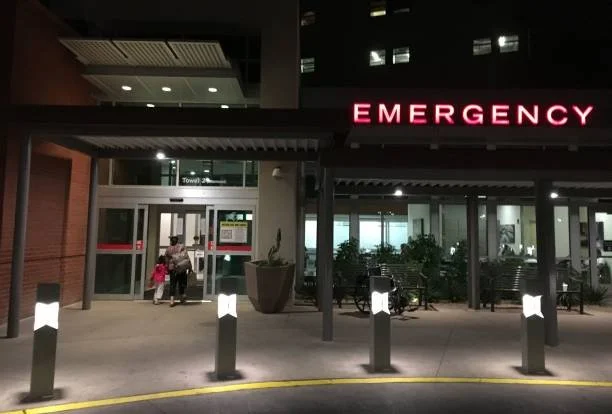
North Carolina - Hospital Regulatory & Mandatory Reporting Guide
North Carolina — Hospital Regulatory & Mandatory Reporting Guide
North Carolina operates a structured but often misunderstood hospital reporting system centered on mandatory reporting of adverse events to the Department of Health and Human Services (DHHS). Unlike highly public systems such as New York, North Carolina functions as a **regulatory enforcement state**, where reporting obligations, licensure oversight, and complaint investigations collectively define institutional exposure.
The state requires hospitals to report specified adverse events within defined timeframes. However, the real litigation value does not arise from the existence of the report alone. It arises from how the hospital:
- Recognized the event
- Classified and reported it
- Internally investigated the occurrence
- Aligned documentation with regulatory submission
- Implemented corrective actions
As a result, North Carolina cases are frequently won or lost on **institutional response integrity**, not just clinical decision-making.
Quick Authority Snapshot
Primary Regulatory Authority
North Carolina Department of Health and Human Services (DHHS), Division of Health Service Regulation.
Core Reporting Requirement
Hospitals must report adverse events involving death or serious injury, including those resulting from errors or system failures.
Typical Timeline
Initial reporting is generally required within a defined short timeframe (often interpreted as within 24 hours or next business day depending on event type and severity).
Attorney Takeaway
In North Carolina, cases frequently hinge on whether the hospital recognized the seriousness of the event early enough and whether internal and external narratives align.
Regulatory Architecture — DHHS Oversight and Reporting Framework
Mandatory Adverse Event Reporting
Hospitals are required to report adverse events involving death or serious harm. These reports are submitted to DHHS and may trigger regulatory review or investigation.
The reporting requirement creates an external accountability mechanism that extends beyond internal incident reporting.
Licensure Enforcement Model
North Carolina enforces hospital compliance primarily through licensure standards. Violations may result in:
- Deficiency findings
- Corrective action requirements
- Potential penalties
Complaint & Investigation Pathways
In addition to mandatory reporting, DHHS may initiate investigations based on complaints, sentinel events, or identified risks. These investigations often reveal systemic issues beyond the initial event.
Internal Quality Assurance Interface
Hospitals maintain internal QA processes, but discrepancies between internal findings and reported facts can create significant litigation exposure.
Timeline Forensics — Advanced Reconstruction of Institutional Response
North Carolina hospital cases often require a different type of forensic reconstruction than states with a highly public adverse-event registry. The issue is usually not whether the public can see the event. The issue is whether the hospital’s internal chronology, licensure-facing obligations, complaint exposure, and possible federal survey risk all point to the same moment of recognition and the same account of what happened. Because North Carolina hospital licensure rules define an “incident” broadly as an action, occurrence, or happening likely to cause physical or mental harm to a patient, timeline analysis should begin earlier than hospitals often suggest. It should begin when the patient’s condition or the operational event first crossed into a zone of foreseeable harm. :contentReference[oaicite:1]{index=1}
Phase 1 — Earliest Clinical Signal of Harm
The first question is when the hospital had enough information to recognize that the patient was entering a danger state. In North Carolina litigation, that usually means identifying the earliest credible signal of instability rather than waiting for a later collapse. Those signals may include abnormal vital-sign trends, worsening laboratory values, escalating nursing concern, repeated patient complaints, unexplained decline in mental status, delayed recovery after a procedure, evidence of internal bleeding, respiratory change, sepsis markers, or a failed response to prior treatment. If the chart shows that meaningful danger was visible before the hospital acted, the case quickly shifts from “bad outcome” to “missed escalation opportunity.” :contentReference[oaicite:2]{index=2}
Phase 2 — Nursing Recognition and Chain-of-Command Activation
The next issue is whether bedside staff recognized the seriousness of the event and used the chain of command appropriately. North Carolina cases frequently turn on whether nursing staff documented concern without obtaining an effective response, whether the provider was actually notified when the hospital later claims, whether the nurse-to-provider communication conveyed the true severity of the change in condition, and whether the hospital had an effective mechanism for escalating beyond an unresponsive or unavailable physician. When bedside concern is visible in the record but the institution cannot show a timely, effective chain-of-command response, the failure looks institutional rather than individual. :contentReference[oaicite:3]{index=3}
Phase 3 — Physician Response and Intervention Delay
Even where notification occurred, liability often develops because the intervention lagged behind the clinical need. North Carolina failure-to-rescue cases frequently involve delayed orders, delayed imaging, delayed surgical or specialty consultation, delayed transfer to ICU, delayed antibiotics, delayed blood products, or prolonged observation of obvious deterioration. This phase is often where the chart and the defense narrative begin to diverge. Hospitals may argue that recognition occurred and treatment followed, while the record instead shows a widening interval between recognition and effective action. That interval is often the most important causation window in the case. :contentReference[oaicite:4]{index=4}
Phase 4 — Administrative Awareness and Regulatory Posture
North Carolina’s licensure-enforcement structure makes administrative awareness especially important. Once the event became serious, when did charge leadership know, when did unit leadership know, when did risk management know, and when did executive administration know? DHSR describes itself as performing regulatory and remedial activities for health, safety, and well-being, so a serious patient event that never moved meaningfully into administrative review can suggest a weak internal safety-reporting culture. In litigation, delayed administrative awareness often supports the argument that the hospital did not have a functioning internal system for surfacing serious events early enough to prevent recurrence or to manage them consistently. :contentReference[oaicite:5]{index=5}
Phase 5 — Protective Reporting and Parallel Timelines
Where the facts include suspected abuse, neglect, or exploitation, North Carolina cases may develop a second or third timeline outside the clinical chart. NCDHHS states that suspected child abuse or neglect must be reported to the county department of social services, and North Carolina’s adult protective law requires any person with reasonable cause to believe a disabled adult is in need of protective services to report that information to the director. In hospital litigation, these statutes matter because they change the question from “what treatment was provided?” to “what did the hospital do once suspicious facts were known?” A delay in protective reporting can become as damaging as a delay in treatment. :contentReference[oaicite:6]{index=6}
Phase 6 — Record Integrity and Post-Event Narrative Control
The final stage of timeline forensics is testing whether the hospital’s later story matches the contemporaneous record. North Carolina hospitals often defend these cases through policies, internal review summaries, and witness recollection. But the strongest plaintiff-side analyses compare those later explanations to the bedside chart, time-stamped medication administration records, monitoring data, call logs, order-entry times, transfer records, and any complaint or state-investigation materials. Missing documentation during the most critical period, late entries, sudden retrospective clarity in later notes, or a mismatch between the event narrative and the actual sequence of care can severely damage institutional credibility. :contentReference[oaicite:7]{index=7}
Federal Overlay — How CMS and EMTALA Amplify North Carolina Exposure
North Carolina is a state where federal overlay often carries more litigation weight than the state reporting structure itself. That is not because state regulation is weak. It is because North Carolina’s hospital system is licensure-driven and operational, while federal standards under the Medicare Conditions of Participation and EMTALA often provide the more recognizable language for proving that the event reflected institutional failure rather than isolated bedside judgment. The strongest North Carolina cases frequently combine state licensure inadequacy with federal systems-failure themes. :contentReference[oaicite:9]{index=9}
CMS Conditions of Participation — Institutional Failure Framework
North Carolina hospital licensure rules in 10A NCAC 13B are tied in multiple sections to federal hospital Conditions of Participation, including infection control and other operational standards. That matters because the federal framework gives attorneys a structured way to analyze breakdowns in nursing services, reassessment, quality oversight, infection prevention, laboratory operations, patient rights, and governing body accountability. In litigation, this often allows the case to move beyond “a clinician made a mistake” into “the hospital’s operating system was not functioning safely.” :contentReference[oaicite:10]{index=10}
Nursing Services, Monitoring, and Failure-to-Rescue Exposure
Many North Carolina hospital cases are effectively federal nursing-services cases disguised as local malpractice claims. When a patient shows a measurable decline and the institution fails to reassess, escalate, monitor, communicate, or intervene promptly, the conduct often fits a Conditions-of-Participation style systems critique. These cases become especially dangerous when the chart reflects repeated bedside concern but no effective physician response, no clear chain-of-command activation, and no documented administrative response to the pattern. :contentReference[oaicite:11]{index=11}
Infection Control — Dual State and Federal Exposure
North Carolina’s hospital rules include a dedicated infection control section, and the state’s rule-necessity materials identify those provisions as implementing the federal infection control CoP framework. This makes infection cases particularly valuable. A hospital-acquired infection, outbreak, isolation failure, contaminated equipment issue, or delayed response to microbiology findings can create layered exposure: hospital rule noncompliance, infection-control systems failure, and potentially public-health implications depending on the organism or spread pattern. These are among the strongest institutional cases because they often implicate surveillance, staffing, training, environmental controls, and quality oversight at once. :contentReference[oaicite:12]{index=12}
EMTALA — Emergency Department and Transfer Cases
North Carolina emergency cases frequently become more valuable when analyzed under EMTALA rather than negligence alone. Delayed medical screening, failure to stabilize, delayed transfer, inadequate specialty response, psychiatric boarding failures, and transfer-out decisions driven by capability or capacity problems can create a separate federal liability path. This is particularly important in rural or resource-constrained environments, where defendants often frame delay as inevitable. EMTALA analysis helps reframe the issue as whether the hospital met the minimum emergency obligations imposed by federal law regardless of local operational strain. :contentReference[oaicite:13]{index=13}
Survey, Deficiency, and Corrective Action Leverage
Serious North Carolina events may also create survey risk through DHSR and, where federal participation standards are implicated, through CMS-related deficiency processes. Even where a plaintiff cannot directly wield every survey artifact as trial evidence, the existence of deficiency findings, corrective demands, or state concern can materially affect valuation, deposition strategy, mediation leverage, and institutional witness credibility. In practical terms, survey exposure turns a one-patient case into a question about whether the hospital’s systems were safe for all patients. :contentReference[oaicite:14]{index=14}
Federal Overlay as Objective Institutional Proof
From a case-building standpoint, federal overlay matters because it supplies a language of objective institutional deficiency. Jurors and mediators may not care about every subsection of North Carolina licensure law, but they understand failures in infection control, failures in emergency stabilization, and failures in hospital quality systems. The federal overlay therefore strengthens the argument that the event was foreseeable, preventable, and rooted in hospital operations rather than chance.
Litigation Implications — Advanced Institutional Liability Analysis
North Carolina hospital litigation is frequently undervalued when it is framed as a narrow provider-negligence dispute. In reality, many of the strongest North Carolina cases are institutional cases in which the hospital’s systems for recognition, escalation, reporting, protective response, and operational control are more important than any single bedside decision. The absence of a highly public adverse-event registry does not reduce case strength. It often means counsel must build the institutional story more deliberately through records, timelines, staffing evidence, and regulatory context. :contentReference[oaicite:16]{index=16}
North Carolina Favors Institutional Adequacy Theories
Because the state’s framework is licensure-driven, the litigation question often becomes whether the hospital was operating safely as an institution. That means the key issues are not limited to whether a provider made an incorrect judgment. They include whether the hospital had adequate staffing structures, functioning escalation protocols, effective infection-control systems, reliable administrative review pathways, and a culture that surfaced serious events quickly enough to address them. These themes support broader institutional liability and tend to increase case value.
Documentation Becomes a Liability Multiplier
In North Carolina cases, documentation problems often cause more damage than the initial medical event. Missing bedside notes, inconsistent nursing narratives, unexplained order delays, absent communication records, and late documentation during the most critical deterioration period all support the argument that the hospital either did not recognize the seriousness of the event or cannot now reconstruct it reliably. Once the record looks unstable, defense explanations become far less persuasive.
Failure-to-Rescue Cases Are Especially Strong
North Carolina is particularly vulnerable to failure-to-rescue theories because many hospital cases involve measurable clinical decline before the catastrophic endpoint. Sepsis progression, bleeding, respiratory collapse, neurologic deterioration, and post-procedure decline all create opportunities to show that the danger was visible and action lagged behind the clinical need. These are highly effective cases because they focus on preventability through monitoring and escalation rather than on abstract hindsight.
Protective Reporting Failures Change the Nature of the Case
Where the facts involve suspected child abuse, neglect, exploitation, or a disabled adult in need of protective services, the case can shift abruptly from a treatment dispute into a protection-and-recognition dispute. North Carolina law requires suspected child abuse or neglect to be reported to county DSS, and any person with reasonable cause to believe a disabled adult needs protective services must report to the director. Once those thresholds are met, the hospital’s failure is no longer just medical. It is institutional, statutory, and protective in nature. That can be particularly powerful in pediatric trauma, elder neglect, suspicious bruising, dehydration, pressure injury, and unsafe discharge cases. :contentReference[oaicite:17]{index=17}
Federal Overlay Increases Settlement Pressure
Cases become materially more valuable when the same facts can be framed as both North Carolina institutional inadequacy and federal systems failure. A hospital defending a bedside-negligence claim is in a different position from a hospital defending a narrative of nursing-services breakdown, emergency stabilization failure, infection-control weakness, or QAPI failure. Federal overlay gives plaintiff counsel stronger mediation posture and gives defense counsel a stronger incentive to resolve cases before broader institutional discovery matures.
Pattern Evidence and Repeat Vulnerability Matter
Even without a public event database, North Carolina hospitals remain vulnerable to pattern-based institutional theories. Repeated falls, repeat pressure injuries, recurrent escalation failures, repeated infection-control lapses, persistent ED boarding problems, or repeated communication breakdowns can support the view that the event was not isolated. These pattern cases are especially dangerous because they suggest tolerated risk rather than one-time mistake.
The Best North Carolina Cases Are Chronology Cases
In practical litigation terms, the strongest North Carolina hospital matters are usually chronology cases: when the danger first appeared, when staff appreciated it, when physicians were told, when meaningful treatment began, when administrators became aware, whether outside reporting duties were triggered, and whether the final documentation tells the same story. When the hospital cannot answer those questions cleanly, institutional credibility deteriorates quickly.
Attorney Application
Plaintiff Strategy
- Reconstruct timeline
- Identify reporting failures
- Expose system breakdowns
Defense Strategy
- Demonstrate compliance
- Align documentation
- Support institutional response
When to Engage Lexcura Summit
North Carolina hospital matters often require early clinical and regulatory analysis because liability is rarely confined to a single clinical decision. The strongest cases typically involve breakdowns across recognition, escalation, institutional awareness, and system response. In a licensure-driven enforcement state, early expert involvement allows counsel to determine whether the matter is a contained clinical dispute or a broader institutional failure case involving DHSR exposure, federal overlay, and systemic deficiencies.
Engage Early When the Case Involves:
- Failure to rescue, including delayed recognition of sepsis, bleeding, respiratory decline, or neurological deterioration
- Breakdowns in escalation pathways, including delayed or ineffective physician notification or failure to activate chain-of-command protocols
- Gaps in monitoring, reassessment, or response to abnormal vital signs, labs, or patient complaints
- Infection control concerns, hospital-acquired infections, or potential outbreak exposure
- Emergency department delays, stabilization failures, or transfer-related issues implicating EMTALA
- Falls, pressure injuries, medication complications, or device-related harm where risk was identifiable
- Documentation inconsistencies, missing time periods, or late entries affecting timeline integrity
- Potential reporting obligations involving suspected abuse, neglect, or exploitation of vulnerable or disabled adults
- Pediatric cases involving possible child-protection reporting requirements
- Cases where institutional liability may extend beyond an individual provider to staffing, supervision, or operational systems
What Lexcura Summit Delivers
- Litigation-grade medical chronologies with precise time-sequencing of clinical events and escalation points
- Standards-of-care analysis aligned with hospital operations, nursing expectations, and regulatory frameworks
- Institutional exposure mapping across staffing, escalation systems, infection control, and administrative response
- Physiological causation analysis to clarify progression of injury, deterioration, and preventability
- Identification of system failures that support institutional liability theories
- Strategic insights for deposition preparation, discovery planning, mediation positioning, and trial development
Records may be submitted through the HIPAA-secure intake portal for preliminary review. Lexcura Summit then issues a letter of engagement outlining scope and cost. Upon confirmation and upfront payment, analysis begins and the completed work product is returned within 7 days.
Closing Authority Statement
North Carolina hospital liability is most accurately evaluated through the lens of institutional performance rather than isolated clinical decision-making. The state’s licensure-driven regulatory framework, enforced through the Department of Health and Human Services, does not measure care solely by retrospective judgment. It evaluates whether the hospital functioned as an integrated system capable of recognizing risk, escalating concern, and delivering timely intervention in response to evolving patient conditions.
In practice, liability emerges not from a single point of failure, but from the convergence of multiple breakdowns across the continuum of care. These include delayed recognition of deterioration, ineffective escalation pathways, fragmented communication between clinical providers, inadequate monitoring systems, and delayed or absent administrative awareness. When these failures occur in sequence, they demonstrate not an isolated error, but a system operating below the threshold required to ensure patient safety.
The evidentiary strength of these cases lies in chronology. Where the clinical record shows that deterioration was observable, that escalation opportunities existed, and that intervention lagged behind clinical need, the outcome becomes increasingly attributable to institutional failure rather than unavoidable progression. This is particularly true where the hospital’s documentation, internal response, and post-event narrative fail to align with the actual sequence of events reflected in the record.
North Carolina’s regulatory structure reinforces this analysis by requiring hospitals to maintain safe operational systems, effective supervision, and reliable response mechanisms. When those systems fail, the resulting exposure extends beyond traditional malpractice into institutional liability grounded in operational inadequacy. This exposure is further amplified when the same facts implicate federal Conditions of Participation or EMTALA obligations, transforming a clinical event into a multi-layered systems failure with both state and federal significance.
Judicial Framing:
Where a hospital has the information necessary to recognize patient risk, yet fails to escalate, intervene, or respond in a timely and coordinated manner, the resulting harm is not the product of clinical uncertainty—it is the product of institutional failure.
Definitive Conclusion:
The most compelling North Carolina cases demonstrate that harm did not arise from an unavoidable medical outcome, but from a predictable sequence of failures across recognition, escalation, intervention, and oversight. In these cases, liability is established not by what the hospital intended, but by what its systems failed to do when patient safety depended on them.