
Washington - Hospital Regulatory &Mandatory Reporting Guide
Drive
Washington — Hospital Regulatory & Mandatory Reporting Guide
Washington is one of the more important hospital reporting jurisdictions in the country because it combines a formal adverse health events reporting statute, Department of Health oversight, mandatory root cause analysis, corrective action planning, and a separate public-health reporting structure for notifiable conditions. This is not a state in which serious events can be understood solely through internal incident review. Once an event crosses the reporting threshold, the hospital is no longer dealing only with a clinical outcome. It is dealing with a regulatory chronology, a formal adverse-event classification problem, a state-facing explanatory burden, and potentially a broader institutional credibility failure.
That distinction matters enormously in litigation. In many jurisdictions, counsel must work primarily from the chart and internal policy documents. In Washington, the analysis often extends further: whether the occurrence fit one of the state’s serious reportable adverse events, when the facility confirmed the event, whether the required 48-hour notification was timely, whether the 45-day report was timely and complete, whether the root cause analysis was methodologically sound, whether the corrective action plan was real or performative, whether the event also triggered notifiable-conditions reporting, and whether the institution’s regulatory narrative aligns with the ordinary medical record.
As a result, strong Washington hospital cases are usually not framed as simple bedside-negligence disputes. They are framed as institutional response cases involving recognition, reporting, root cause analysis, corrective action, and documentation integrity.
Quick Authority Snapshot
Primary State Regulatory Authority
Washington State Department of Health, including oversight of adverse health event reporting, hospital licensure, and notifiable-conditions reporting.
Core Hospital Reporting Framework
RCW 70.56 and WAC 246-302, requiring medical facilities to report confirmed adverse health events and tying those events to the National Quality Forum serious reportable events list adopted in Washington rule.
Key Timelines
Notification to the department within 48 hours of confirmation of the adverse health event; full report within 45 days of confirmation; report may be amended within 60 days; separate public-health reporting timelines apply for notifiable conditions.
Attorney Takeaway
In Washington, case value often turns on whether the hospital recognized the event as a reportable adverse health event early enough, selected the correct classification, submitted timely notification and reporting, and maintained consistency between the chart, root cause analysis, and institutional explanation.
Statutory & Regulatory Architecture
RCW 70.56 — Adverse Health Events and Incident Reporting System
Washington’s patient-safety structure is not informal. Chapter 70.56 RCW establishes an adverse health events and incident reporting system designed to facilitate quality improvement, improve patient safety, assist the public in making informed choices, and decrease medical errors in a nonpunitive manner. This matters because Washington converts certain serious hospital occurrences into formal state-facing events. Once that happens, the hospital’s obligations are no longer limited to clinical care and internal documentation; they expand into formal adverse-event reporting and institutional explanation.
WAC 246-302 — Adverse Health Events Reporting Rule
The operative Washington rule is unusually important in litigation because it does not rely on vague timing language. A medical facility must notify the department within forty-eight hours of confirmation of the adverse health event and must submit a full report within forty-five days of confirmation. That gives counsel a concrete rule-based framework for testing whether the hospital delayed recognition, delayed confirmation, or permitted the event to sit in internal review long enough to compromise chronology integrity.
NQF Serious Reportable Event Categories
Washington’s rule does not leave the event categories undefined. It adopts the National Quality Forum’s twenty-nine serious reportable events, including surgical or invasive-procedure events, product or device events, patient-protection events, care-management events, environmental events, and criminal events. This matters because Washington gives attorneys a direct externalized framework for testing whether a hospital under-classified a wrong-site procedure, medication error, elopement, suicide/self-harm event, contaminated product injury, air embolism, criminal assault, or other major occurrence.
Root Cause Analysis and Corrective Action Mandate
Washington’s framework becomes even more important because it requires more than a simple notice. The 45-day report must include a root cause analysis and corrective action plan, and the root cause analysis must follow the Joint Commission methodology, the Department of Veterans Affairs National Center for Patient Safety methodology, or another nationally recognized methodology accepted by the Department. The report must also address staffing, including the number of patients, nurses, unlicensed assistive personnel, temporary staffing personnel, and whether nurses were working beyond regularly scheduled consecutive hours. This is a major litigation feature because it directly integrates staffing and systems causation into the formal reporting structure.
Notifiable Conditions and Parallel Reporting Duties
Washington also layers public-health reporting onto hospital events. Washington’s notifiable-conditions system requires health care providers and facilities to report specified communicable diseases and conditions to local health jurisdictions under WAC 246-101 and related disease-specific guidance. In practical litigation terms, infection-related events, outbreak conditions, unexplained critical illness or death, and certain urgent diagnoses can create a second state-facing chronology independent of the adverse health event system.
High-Value Litigation Patterns in Washington
Failure to Rescue / Delayed Recognition Cases
These are among the most valuable Washington hospital cases because they frequently fit the care-management adverse-event framework while also exposing broad institutional weakness. Common patterns include delayed sepsis recognition, failure to respond to worsening vitals, missed post-operative bleeding, delayed escalation after abnormal laboratory values, ineffective rapid response activation, and prolonged nursing concern without physician intervention. These cases are especially strong when the event later appears underreported, incompletely analyzed, or described more narrowly in the state report than the chart supports.
Wrong Procedure, Retained Object, and Major Procedural Error Cases
Because Washington expressly uses the NQF serious reportable events list, wrong-site surgery, wrong-patient procedures, wrong procedures, retained foreign objects, and intraoperative death in an ASA Class 1 patient often become more structured than in many states. These cases are particularly important because the adverse-event rule gives counsel a direct regulatory lens through which to test recognition, confirmation, and institutional response.
Medication, Device, and Care-Management Harm Cases
Washington’s adopted categories expressly include medication errors causing death or serious injury, contaminated drugs/devices/biologics, device misuse or malfunction causing serious injury, and air embolism events. These cases are often less about the final injury alone and more about medication systems, pharmacy verification, device setup, monitoring reliability, staff competency, and whether the hospital’s root cause analysis truly addressed the operational contributors.
Elopement, Suicide, Self-Harm, and Patient Protection Cases
Washington expressly includes patient elopement with death or serious injury and patient suicide, attempted suicide, or self-harm causing serious injury while being cared for in a health care setting. These cases can become highly damaging institutional matters because they directly implicate observation levels, sitter effectiveness, psychiatric safety controls, environmental safeguards, access control, supervision, and whether the institution recognized warning signs early enough.
Criminal Events, Assault, and Vulnerable-Patient Cases
Washington’s NQF-based framework includes criminal events, and related Washington child and vulnerable-adult protection laws add additional significance. Physical assault, sexual misconduct, patient release to an unauthorized person, or other protection failures can become stronger institutional cases when the hospital’s adverse-event narrative, internal safety chronology, and mandatory-reporting conduct do not align.
Infection Control, Outbreak, and Notifiable Condition Cases
Infection-related events are particularly strong in Washington because they may implicate adverse-event reporting, notifiable-conditions reporting, and federal infection-control expectations simultaneously. Outbreak conditions, missed isolation, delayed recognition of transmissible disease, contaminated equipment, procedural sterility breakdowns, and delayed response to laboratory evidence can all widen the case from bedside care into hospital-wide surveillance and prevention failure.
Timeline Forensics — Advanced Reconstruction of Washington Adverse Event Reporting and Institutional Response
Washington cases often turn on timeline reconstruction more than on any other single issue. Because the statute imposes a 48-hour notification clock after confirmation and a 45-day reporting deadline with root cause analysis and corrective action plan, the attorney’s task is to compare the clinical timeline, the administrative timeline, and the regulatory timeline. Where those timelines diverge, credibility damage can be substantial.
Phase 1 — Clinical Recognition
The first question is when the hospital had enough information to have reasonable cause to believe the reportable adverse event occurred. This may arise before the institution formally labels the event. In practice, it may begin when staff recognize profound deterioration, serious injury, wrong-site treatment, unexpected death, major device failure, severe medication harm, elopement, self-harm, or a qualifying infection-control event. The critical Washington issue is often whether the hospital delayed “confirmation” in a way that delayed the regulatory clock.
Phase 2 — Internal Escalation
The next question is whether the event moved quickly enough from bedside recognition to administrative recognition. When did charge nursing know? When did the attending know? When did patient safety staff know? When did risk management know? When did leadership know? Did the event remain compartmentalized within a unit too long? Washington cases frequently expose an internal lag in which the clinical team recognized seriousness before hospital leadership treated the event as a confirmed adverse health event.
Phase 3 — Initial Notification Decision
This is often the most important litigation stage. Was the event confirmed and reported to the department within forty-eight hours? Was it classified accurately under the Washington adverse-event categories? Was the narrative broad enough to reflect the actual seriousness of the event? Hospitals under pressure sometimes describe the occurrence in narrower terms than the chart supports. That discrepancy can become a powerful theme because it suggests the institution attempted to minimize regulatory exposure at the notification stage.
Phase 4 — Root Cause Analysis Window
Washington expects more than a cursory review. The full report must be submitted within forty-five days of confirmation and must include both a root cause analysis and corrective action plan. This stage should be examined with precision. Did the hospital interview the right people? Did it analyze staffing, supervision, physician response, handoff failures, device processes, pharmacy systems, communication breakdowns, and workload issues? Or did it produce a narrow provider-focused explanation that avoided broader operational causation?
Phase 5 — Corrective Action and Implementation
Washington’s rule makes the institution’s corrective-action story critically important. The corrective action plan must address how findings will be corrected, when correction will be completed, who is responsible, what action will prevent recurrence, and how effectiveness will be monitored. In a high-value case, failure to implement credible corrective measures can be as damaging as the underlying event because it suggests the hospital’s safety structure was performative rather than functional.
Phase 6 — Record Integrity and Narrative Consistency
The final forensic comparison is whether the chart, notification, full report, root cause analysis chronology, staffing data, leadership communications, and later institutional explanation align. Cases become especially dangerous for hospitals when there are late entries, missing records in the critical deterioration window, internal communications indicating seriousness before formal notification, or root cause conclusions that conflict with the time-stamped chart. In Washington, these conflicts are often more persuasive than abstract expert disagreement because they suggest the institution’s own story is unstable.
Federal Overlay — How CMS and Public Health Standards Amplify Washington Exposure
Washington’s state structure is already robust, but serious hospital events often become substantially more dangerous when they also implicate federal participation standards. The strongest cases are frequently those in which the same event looks bad in three separate ways: clinically, regulatorily under Washington law, and federally under Medicare requirements.
CMS Conditions of Participation — Systems-Failure Framework
The federal Conditions of Participation often overlap directly with the same types of events that trigger Washington reporting. Nursing-services failures, poor reassessment, weak physician response, deficient quality assurance, infection-control breakdowns, patient-protection failures, and inadequate governing-body oversight can all convert a Washington reportable event into a broader federal systems-failure case. This is especially important because federal deficiency language often sounds more institutional and less fact-specific, which can be highly persuasive in mediation and high-value case framing.
Emergency Department and Stabilization Cases
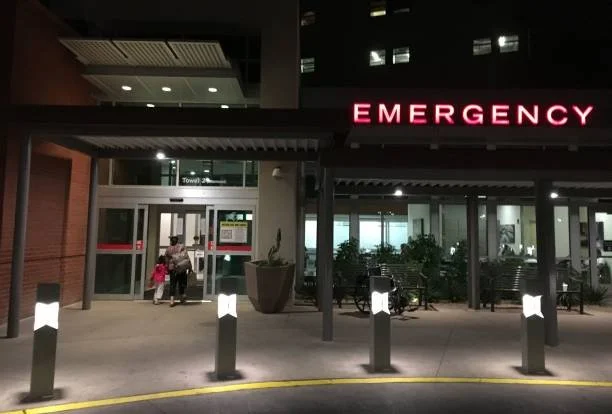
Washington emergency cases are often litigated too narrowly. An emergency department matter involving delayed screening, failure to stabilize, delayed specialist response, psychiatric boarding without appropriate protective response, or inappropriate transfer may fit Washington’s adverse-event structure while also creating federal emergency exposure. That dual-track exposure increases leverage because the hospital must defend both the bedside conduct and the emergency access and stabilization framework.
Survey and Investigation Escalation
A serious Washington event may trigger not only routine state review, but broader survey or investigatory attention. Once that occurs, the institution’s exposure expands beyond the initial patient. The inquiry can move toward staffing models, quality systems, infection prevention, supervision practices, patient-protection failures, and governing-body oversight. This is often how a single-patient case becomes an institutional-case narrative.
Infection Control and Public Health Interaction
Infection-related events are particularly strong in Washington because they may implicate adverse-event reporting, state notifiable-conditions duties, and federal infection-control expectations simultaneously. Outbreak conditions, missed isolation, delayed recognition of transmissible disease, contaminated equipment, procedural sterility breakdowns, and delayed response to laboratory evidence can all widen the case from bedside care into hospital-wide surveillance and prevention failure.
Federal Overlay as Objective Support
From a litigation standpoint, federal findings or federally framed deficiencies often serve as objective support for system-failure arguments. Even when not dispositive, they help move the case away from a battle of hired experts and toward a more persuasive theory that the institution failed under recognized regulatory standards designed to protect patient safety.
Litigation Implications — Advanced Institutional Liability Analysis
Washington hospital litigation should not be approached as a simple negligence problem. It should be approached as a multi-document, multi-timeline, institution-level credibility problem. The most effective theories usually show that the outcome was not merely unfortunate, but that the hospital’s reporting, root cause analysis, and corrective structure exposed deeper organizational weakness.
Misclassification and Underreporting
One of the strongest liability themes in Washington is that the hospital failed to classify the occurrence at the appropriate level of seriousness. This may appear as delayed confirmation, delayed notification, narrowed narrative description, or failure to treat the event as one of Washington’s adopted serious reportable adverse events. In deposition and motion practice, the key issue becomes whether the institution recognized the actual significance of the event when it occurred or attempted to reduce it to a less consequential category.
Investigation Quality as Institutional Credibility Evidence
Because Washington requires a formal root cause analysis and corrective action plan, the quality of the investigation itself becomes an institutional issue. Superficial analyses, missing witness interviews, failure to examine staffing, absence of process mapping, and conclusion-first reasoning can all be used to show that the hospital’s post-event response was defensive rather than safety-oriented. That is often compelling to judges, mediators, and juries because it suggests a broader quality culture problem.
Documentation Integrity as a Liability Multiplier
In Washington, documentation inconsistencies can sharply increase case value. When bedside notes, physician entries, event narratives, root cause chronology, staffing data, and later institutional explanations do not match, the hospital’s position often deteriorates quickly. In practical terms, these cases become less about whose expert sounds better and more about why the hospital told different versions of the same event at different times.
Expansion from Individual Fault to Institutional Fault
A provider-focused case can evolve into an institutional case very quickly in Washington. The reasons are predictable: the adverse health events system creates an external reporting structure; root cause analysis requirements invite scrutiny of prevention efforts; public-health rules add a communicable-disease dimension; and federal overlays point to larger organizational failure. This shift often changes case valuation because institutional fault narratives are more durable than single-provider negligence narratives.
Pattern Evidence and Repeat Vulnerability
Washington’s reporting environment also makes it easier to ask whether the event was truly isolated. Even without access to privileged root cause materials, counsel can examine whether the institution had prior related incidents, similar staffing weaknesses, repeated monitoring problems, recurring falls, repeated elopement risks, recurring infection-control failures, or ongoing device-related concerns. Where those patterns exist, the case becomes less about a mistake and more about tolerated vulnerability.
Settlement and Trial Impact
The practical effect of all this is substantial. A Washington case with a questionable 48-hour notification timeline, weak 45-day report, inconsistent records, and federal overlay exposure will usually carry greater settlement pressure than a similar bedside-only negligence case. At trial, the narrative is also stronger: the hospital did not just make an error; it failed to recognize, report, analyze, and correct the event in the way the law expects.
Attorney Application
For Plaintiff Counsel
- Determine whether the occurrence fit one of Washington’s adopted serious reportable adverse events and whether the hospital notified the department within 48 hours of confirmation.
- Map the bedside chronology against administrative escalation, confirmation timing, 48-hour notification timing, and 45-day reporting chronology.
- Press on whether the event was under-classified, incompletely described, or analyzed too narrowly.
- Examine whether the hospital’s root cause analysis was truly methodological and prevention-oriented or merely protective.
- Use state-facing conduct, root cause reporting, and any federal or public-health overlay to shift the case from individual fault to institutional failure.
For Defense Counsel
- Build a disciplined timeline showing when the hospital confirmed the event and how quickly it acted.
- Demonstrate accurate classification and timely notification and reporting.
- Support the credibility of the root cause analysis by showing broad systems analysis and real corrective steps.
- Align charting, reporting, and institutional explanation before discovery fractures credibility.
- Address federal and public-health dimensions directly rather than leaving them implicit or contested.
When to Engage Lexcura Summit
Washington hospital matters often justify early clinical-regulatory review because the strongest liability themes usually emerge from the interaction between the chart, adverse health event reporting chronology, notifiable-conditions reporting, and institutional response. Lexcura Summit is typically engaged when counsel needs more than a chronology and requires a disciplined analysis of causation, escalation failure, systems exposure, and reporting integrity.
Engage Early When the Case Involves:
- Unexpected death or serious deterioration with unclear reporting history
- Possible underreporting, delayed confirmation, or narrowed event characterization
- Failure to rescue, sepsis, post-operative decline, or delayed escalation
- Wrong-site procedure, retained object, major medication harm, or severe treatment complication
- Falls, elopement, suicide/self-harm, assault, or observation failures
- Infection-control failures, outbreak exposure, or notifiable-condition implications
- Emergency department delay, stabilization dispute, or transfer breakdown
- Documentation inconsistencies between charting and institutional narrative
- Potential institutional liability extending beyond one provider
What Lexcura Summit Delivers
- Litigation-ready medical chronologies with event-sequence precision
- Standards-of-care and escalation analysis tied to hospital operations
- Institutional exposure mapping across reporting, staffing, infection-control, and policy systems
- Physiological causation analysis in deterioration and rescue-failure cases
- Strategic support for deposition, mediation, discovery planning, and expert preparation
Records may be submitted through the HIPAA-secure intake portal for preliminary review. Lexcura Summit then issues a letter of engagement outlining scope and cost. Upon confirmation and upfront payment, analysis begins and the completed work product is returned within 7 days.
Closing Authority Statement
Washington hospital liability is defined not solely by the clinical outcome, but by the institution’s ability to recognize, report, investigate, and respond to adverse events within a structured regulatory framework. Through RCW 70.56, WAC 246-302, hospital licensure oversight, notifiable-conditions reporting duties, and the federal Conditions of Participation, the state imposes a layered accountability model that evaluates not only what occurred at the bedside, but how the hospital translated that event into regulatory action and institutional response.
The analysis therefore begins with clinical reality. Where the medical record reflects observable deterioration, serious injury, unexpected death, or a qualifying adverse health event, the hospital is expected to recognize the significance of that occurrence in real time. When recognition or confirmation is delayed, incomplete, or internally disputed, the foundation of institutional accountability is weakened at its earliest stage.
From that point, the inquiry advances to reporting behavior. Washington requires that qualifying events be reported within defined timelines and analyzed through a formal root cause and corrective structure. Where a hospital delays notification, narrows the description of the event, or selects a characterization inconsistent with the clinical record, the issue is no longer limited to clinical care — it becomes a question of whether the institution accurately represented the event to the State. Discrepancies at this stage introduce immediate credibility risk and often signal broader institutional concern.
The next layer examines the investigation itself. Washington requires a root cause analysis and corrective action plan for reportable adverse events. Where investigations are superficial, narrowly focused on individual providers, or fail to address systemic contributors such as staffing, communication pathways, supervision, operational design, or infection-control process, the institution’s response is no longer corrective — it is defensive. At this stage, liability expands from the event itself to the adequacy of the hospital’s internal safety processes.
The analysis then converges on documentation and narrative consistency. The most consequential Washington cases are those in which the clinical record, adverse event notification, full report, root cause analysis chronology, and institutional explanation do not align. When charting reflects one sequence of events and the regulatory narrative reflects another, the discrepancy becomes more than a documentation issue — it becomes evidence that the institution cannot present a coherent and reliable account of what occurred.
This progression — clinical recognition, regulatory reporting, investigative response, and narrative integrity — creates a compounding framework of liability. Each failure does not stand alone. Each failure reinforces the next. Delayed recognition affects reporting. Inaccurate reporting undermines the investigation. A deficient investigation weakens the institution’s credibility. And compromised credibility amplifies exposure at every subsequent stage of litigation.
Washington’s regulatory structure is designed to expose precisely this type of compounding institutional failure. It does not ask only whether harm occurred. It asks whether the hospital responded to that harm in a manner consistent with its obligations to patients, regulators, and its own safety systems.
Judicial Framing:
Where a hospital fails to recognize or confirm a reportable adverse health event, delays or narrows its reporting, conducts an incomplete root cause analysis, and presents a narrative inconsistent with the clinical record, the resulting harm is not attributable to isolated clinical judgment — it is attributable to institutional failure across multiple regulatory and operational layers.
Definitive Conclusion:
The most compelling Washington cases establish that liability is not created by a single adverse event, but by the hospital’s cumulative failure to recognize, report, investigate, and accurately account for that event. In these cases, the issue is not whether an error occurred, but whether the institution’s systems functioned with sufficient integrity to respond to that error. Where they do not, liability becomes not only foreseeable, but difficult to defend.